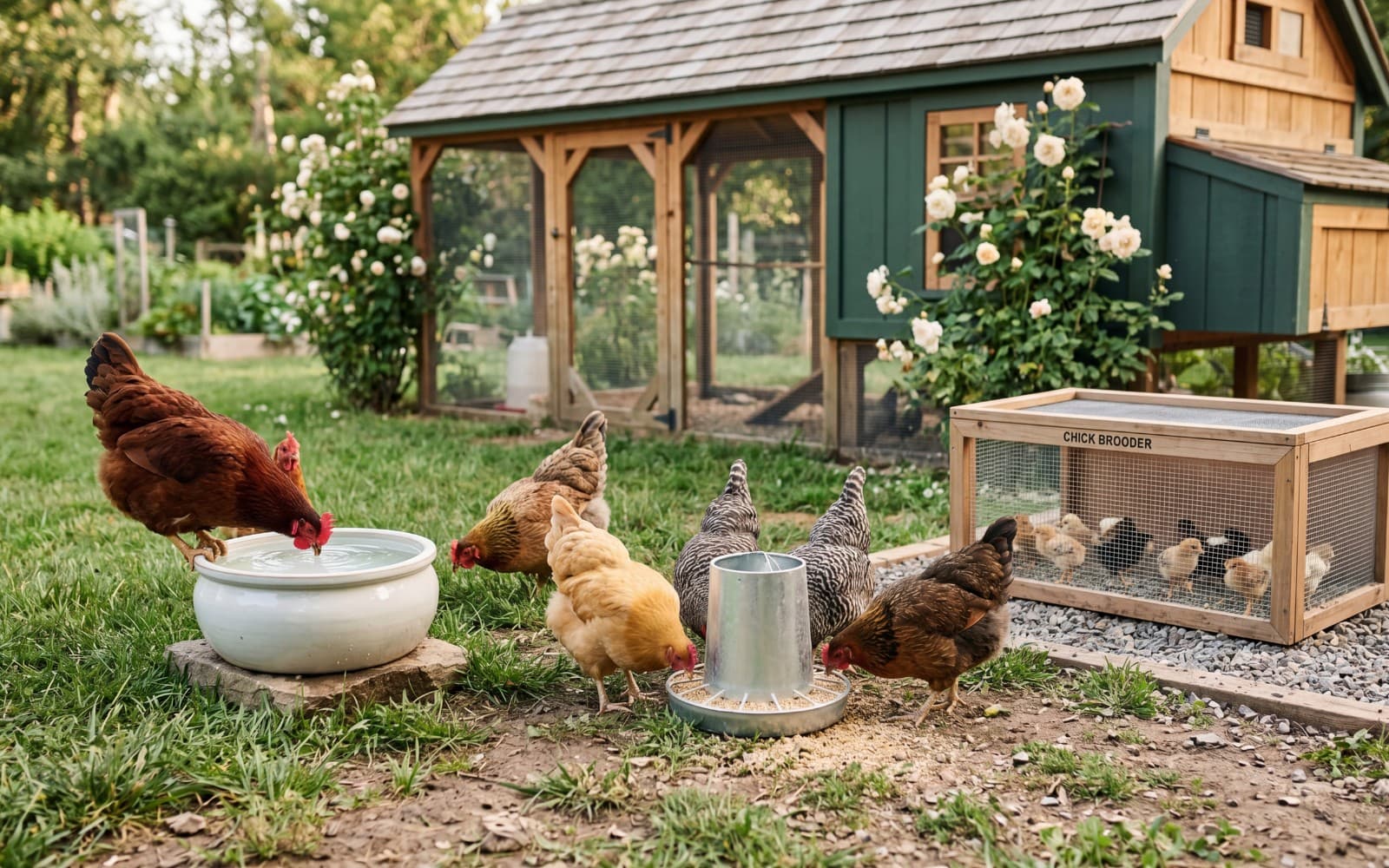
Feeding your flock a nutritionally balanced diet is the foundation of successful chicken keeping. As chickens grow from tiny chicks to active layers, their nutritional requirements change dramatically. Feeding the wrong feed at the wrong stage can lead to organ damage, bone deficiencies, and poor egg production. This guide outlines the essential feeding rules, breaks down diets by life stage, discusses how to feed mixed-age flocks, and explains the roles of grit, oyster shells, and treats.
The basic rule
The basic rule of poultry nutrition is to match feed protein and calcium levels to the flock's developmental stage. Protein supports muscle and feather growth, while calcium is vital for eggshell formation. Treats and kitchen scraps must be kept to a strict limit of 10 percent of their daily intake, with the remaining 90 percent coming from complete commercial feed to prevent nutritional deficiencies. Overfeeding treats dilutes their essential vitamin intake, leading to health issues.
Providing the correct feed form is also important; chicks require fine crumbles that are easy to swallow, pullets do well on crumbles or short pellets, and adult laying hens can be fed pellets, crumbles, or mash. Pellets are highly recommended because they reduce feed waste in the run, as chickens cannot scratch through them as easily as they can mash. Keep feed clean and dry to prevent mold growth.
Chicks (0 to 8 weeks)
Baby chicks (ages 0 to 8 weeks) require chick starter feed, which contains 18% to 20% protein to support rapid growth. Starter feed is available in medicated or non-medicated forms. Medicated feed contains amprolium, which protects chicks from coccidiosis, a common intestinal parasite. Chicks must have constant access to starter feed and fresh water in their warm brooder. The high protein supports rapid bone and feather development.
If you choose non-medicated starter feed, ensure your brooder remains exceptionally clean and dry to minimize exposure to pathogens. Starter feed is formulated as a fine crumble, matching their tiny beaks. Do not introduce any treats during the first two weeks, as their digestive systems are highly sensitive and require only starter nutrition to establish a healthy gut flora.
Ensure that chick feeders are designed to prevent chicks from climbing inside and spilling feed on the brooder floor. Wet or soiled feed in the brooder breeds bacteria and mold, which can cause fatal infections in young chicks. Clean feeders daily and refresh their starter crumbles regularly.
Pullets (8 to 18 weeks)
Young pullets (ages 8 to 18 weeks) should be fed grower feed, which contains 16% to 18% protein and about 1% calcium. This diet allows for steady growth without triggering premature sexual maturity. Pullets are highly active during this phase, so ensuring they have plenty of room to forage and exercise helps build strong skeletal frames before they start laying. Growing frames require a balanced mineral ratio.
Switching to grower feed from starter reduces protein slightly, preventing pullets from growing too quickly, which can cause joint strain and weak bones. Pullets can be introduced to small amounts of safe kitchen greens at this stage, provided they have access to chick grit. Maintain grower feed as their primary food source to ensure their internal organs mature evenly before laying starts.
As pullets transition to grower feed, you can also introduce them to pasture foraging in a secure run. Foraging on fresh grass and clover provides natural carotenoids that support eye development and overall health. Always ensure they have grower-sized grit available to grind down fibrous plants.
Laying hens (18+ weeks)
Mature laying hens (ages 18+ weeks) require layer feed, which contains 16% protein and 3.5% to 4.5% calcium. This high calcium level is essential for producing hard eggshells; a laying hen uses about 2 grams of calcium per egg. Layer feed is available in crumbles, pellets, or mash. Pellets are highly recommended because they minimize feed waste in the run. Calcium supports eggshell deposition and skeletal health.
If laying hens do not receive sufficient calcium in their diet, their bodies will pull calcium directly from their bones to form eggshells, leading to weak bones, fractures, and egg binding. Layer feed also contains specific minerals like phosphorus and Vitamin D3, which aid in calcium absorption. Keep feeders clean and protected from rain to prevent feed from fermenting.
Keep oyster shell in a separate container, as laying hens are highly skilled at regulating their own calcium intake. They will eat the crushed shell only when their bodies require calcium for eggshell formation, preventing excess calcium intake. Ensure the shell feeder is kept dry.
Mixed-age flocks
Managing a mixed-age flock (chicks, pullets, and layers in the same coop) can be challenging. The safest solution is to feed the entire flock a grower feed or an all-flock maintenance feed containing 16% to 18% protein and low calcium. You must then provide crushed oyster shell in a separate, free-choice feeder. Laying hens will naturally eat the oyster shell to get the calcium they need, while young chicks will ignore it. This prevents chick kidney damage.
Never feed layer feed to a mixed flock containing young chicks, as the high calcium will damage the chicks' kidneys, causing gout and early death. The all-flock feed method ensures that all birds get the protein they need for growth and molting, while the layers can self-regulate their calcium needs. Keep the oyster shell container raised off the ground to keep it clean.
Treats, grit, and oyster shell
Treats and scratch grain are excellent for bonding and training, but they must be limited to under 10 percent of your flock's daily diet to avoid diluting their primary nutrition. Confined birds always require a small cup of insoluble poultry grit to grind down treats in their gizzard, while free-ranging chickens can usually find sufficient small stones in the yard. Laying hens also require a separate, free-choice dish of crushed oyster shell to provide the calcium necessary for strong eggshells. Never mix oyster shell directly into the feed, as non-laying birds and roosters do not need the extra calcium.
Common mistakes
Several common feeding mistakes can harm flock health. The most frequent error is feeding high-calcium layer feed to young chicks, which causes irreversible kidney damage. Conversely, keeping laying hens on low-calcium starter or grower feed causes thin shells and skeletal issues. Another mistake is letting treats exceed 10 percent of their diet, which leads to fatty liver disease and obesity. Finally, failing to provide grit to birds eating scratch or treats leads to crop impaction, while mixing calcium supplements directly into the primary feeder overloads non-laying birds.
Frequently Asked Questions
Quick, practical answers to common questions about feeding this to chickens.
About the Author

Amy Schmelter is a lifelong chicken keeper raising a large flock in Florida and the author of the upcoming book What I Wish I Knew Before Getting Chickens. She started Chicken Homestead to share what actually works.
Disclosure
Some links on Chicken Homestead may be affiliate links. We only recommend products we’d use ourselves. See our affiliate disclosure for details.