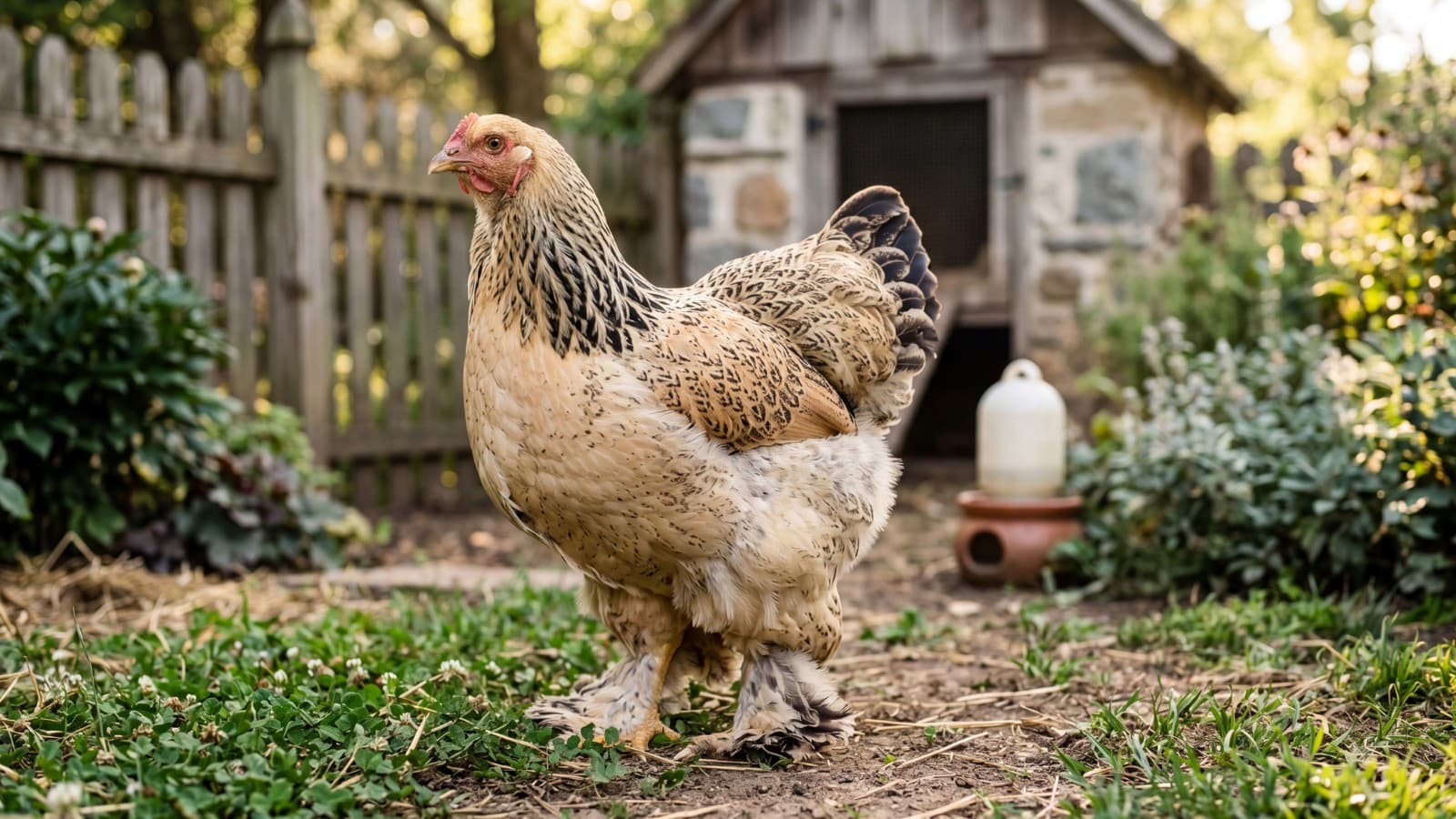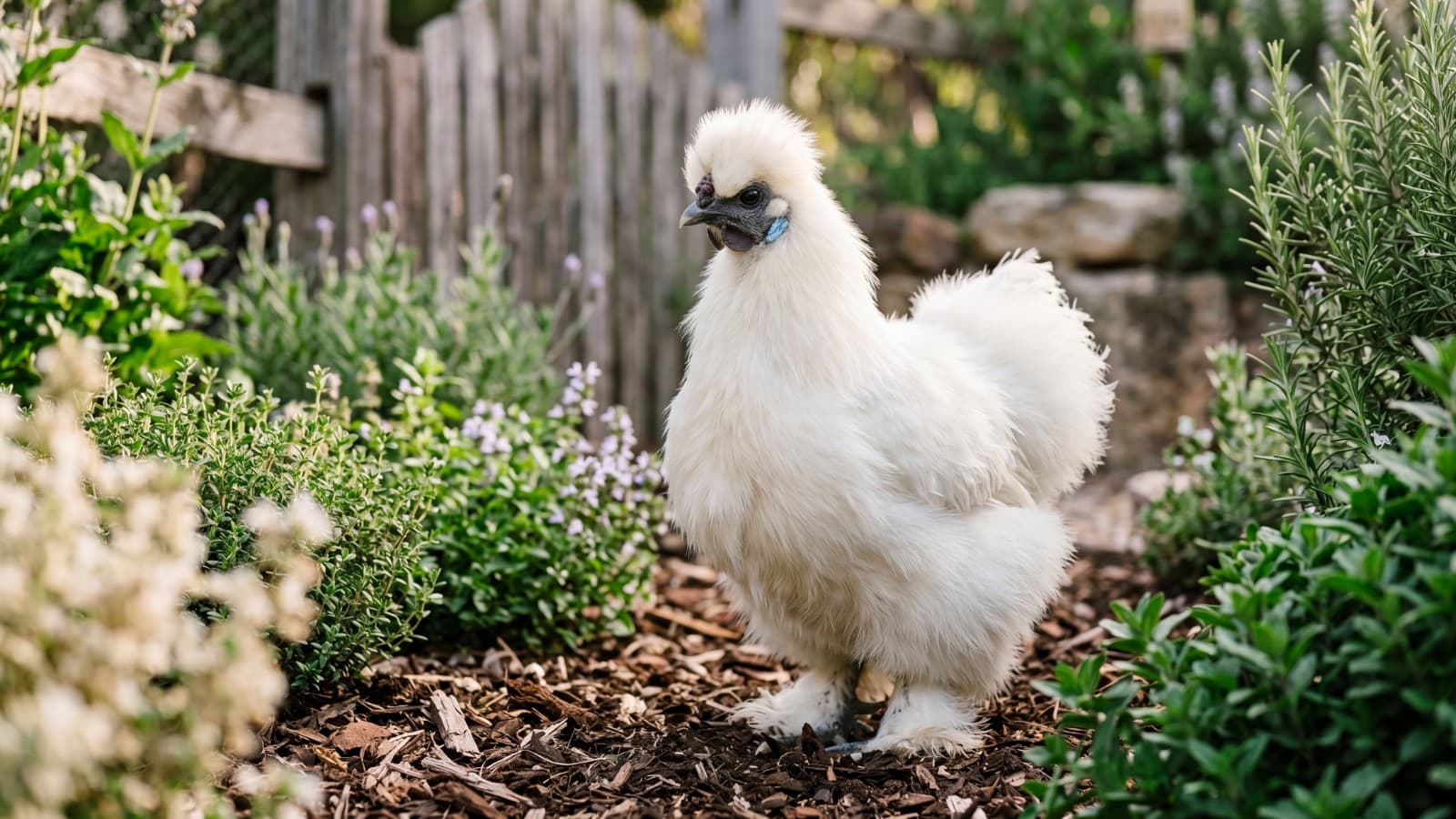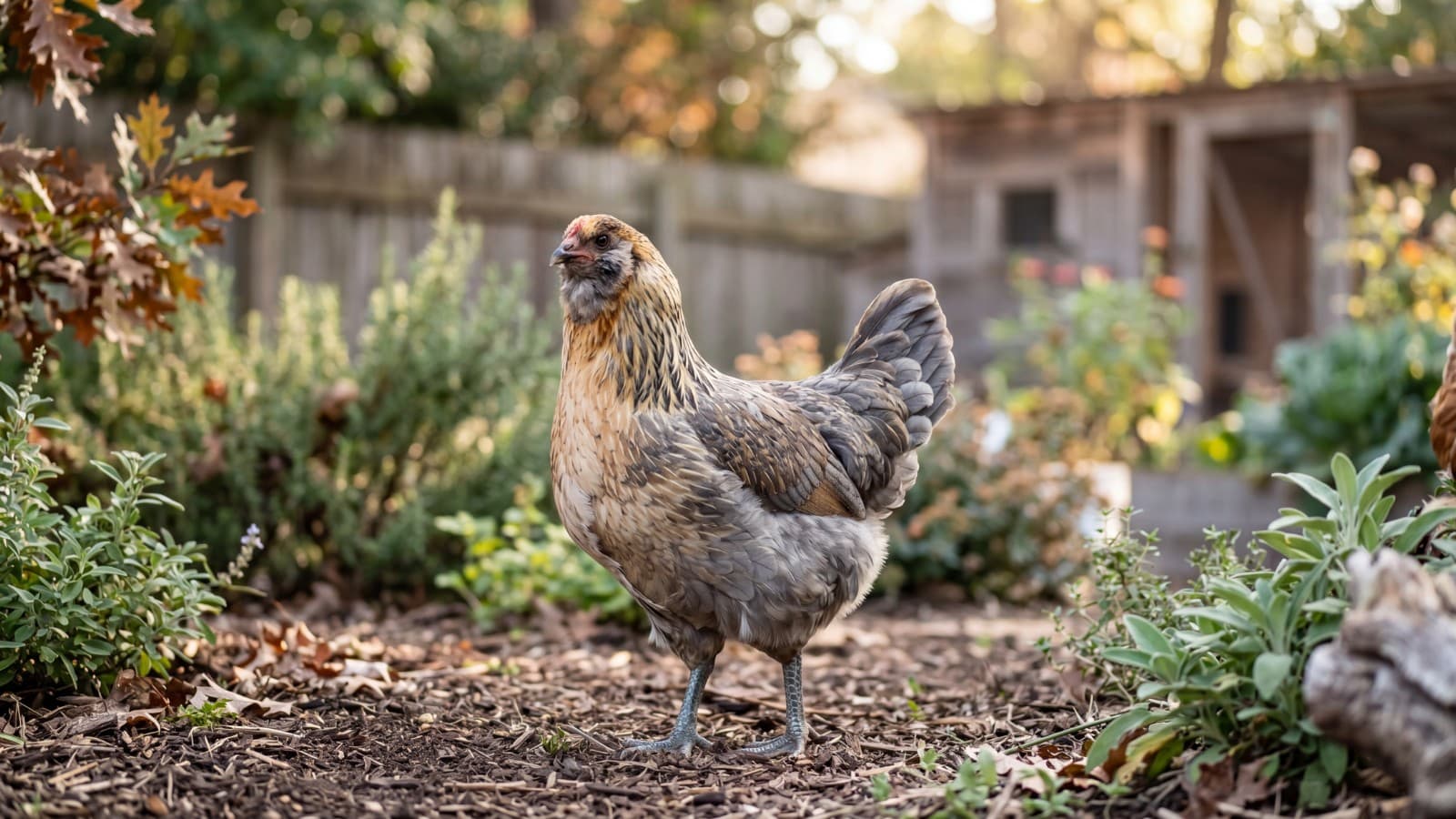
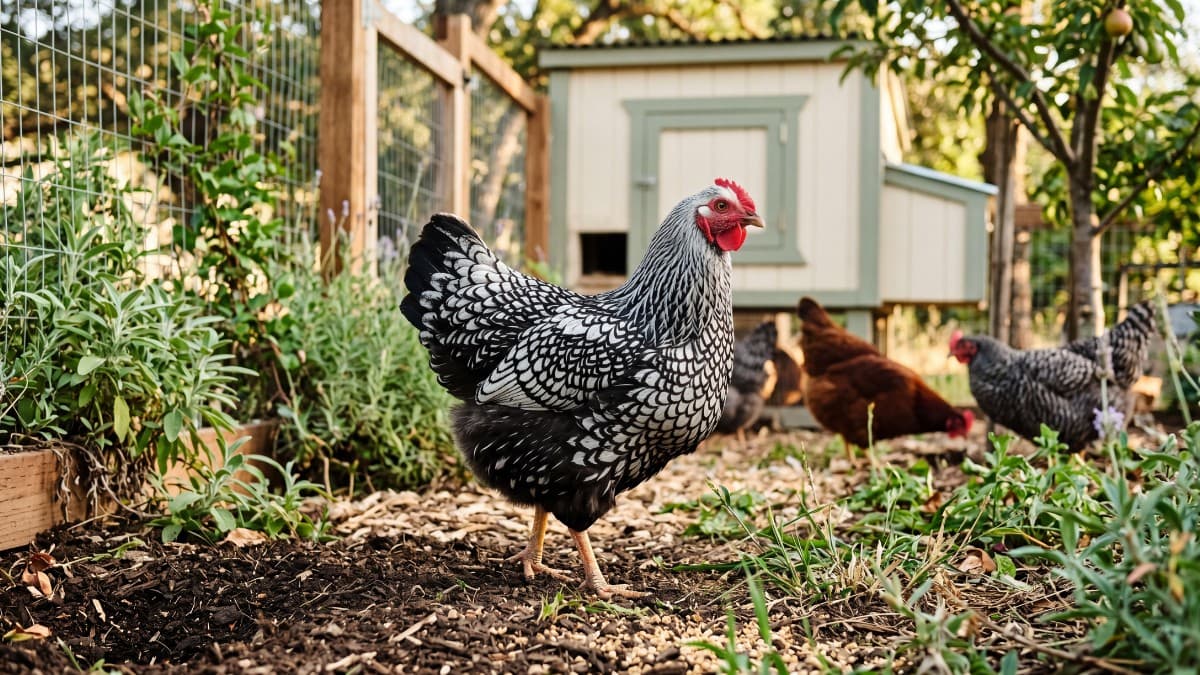
The Wyandotte chicken is a classic American breed developed in the late 19th century and named after the indigenous Wyandot Nation. Created by breeders seeking a productive, dual-purpose bird that could withstand harsh northern winters, the Wyandotte succeeded on all fronts. Today, they are famous for their heavy, rounded bodies and their stunning laced feather patterns, particularly the Silver Laced and Golden Laced varieties. This guide covers their physical characteristics, laying habits, independent personalities, and how to house them safely in your backyard.
Backyard homesteaders appreciate the robust constitution of the Wyandotte, which makes them highly resistant to common poultry diseases. They are active foragers that love to scour the yard for insects, helping control pests naturally. Their stunning plumage also makes them a highly attractive addition to any visual flock layout.
Wyandotte at a glance
Wyandottes are robust, dual-purpose chickens with a deep, broad chest and a beautiful U-shaped back profile. They possess a flat rose comb, yellow legs, and dense feathering that makes them appear larger than they are. The breed is highly active and cold-hardy, laying lots of large brown eggs. With their striking colors—including Silver Laced, Golden Laced, Blue Laced Red, and Columbian—they are as decorative as they are productive.
They are recognized as a standard heritage breed by the American Poultry Association. Their solid build and dependable nature have made them a favorite on American homesteads for over a century. They are practical, reliable, and require very little specialized care.
Appearance and varieties
The Wyandotte's appearance is defined by its round, clean silhouette and heavy feathering. Their rose comb is flat, covered in small points, and tapers to a small spike at the back, staying close to the head to prevent frostbite. Their plumage is broad and tightly packed, providing superb insulation. The Silver Laced variety features white feathers outlined in rich black, while the Golden Laced has golden-bay feathers with black borders. Other varieties include White, Black, Buff, and Blue Laced Red.
This laced feathering creates a scale-like pattern that is incredibly striking in direct sunlight. Their yellow legs are clean and free of feathers, and their bodies are supported by a wide, sturdy stance. Their tails are short and carried upright, contributing to their round, compact profile.
Temperament
Wyandottes are calm, steady, and independent birds. They are not typically lap chickens and may resist being held, but they are peaceful and easy to manage. They are self-sufficient foragers that will spend hours pecking at weeds and grass. Within a mixed flock, their strong-willed nature means they usually rank high in the pecking order, so they should be grouped with other confident breeds to prevent conflict.
While they are somewhat aloof with humans, they are highly social within their own flock. They are rarely flighty and do not startle easily, making them steady and reliable. They handle confinement well but are happiest when allowed to free-range in a secure pasture or yard.
Egg laying
Wyandotte hens are excellent producers of large, light-to-medium brown eggs, averaging 200 to 240 eggs per year. They lay consistently year-round and are less affected by cold weather than breeds with single combs. While they are not overly broody, some hens will sit on nests and make excellent mothers if allowed to hatch a clutch. Their egg-laying longevity is a major asset for homesteaders.
Their eggs have very strong shells and consistent quality. A pullet will typically start laying around 20 to 24 weeks of age. Their winter laying capability means you can enjoy fresh eggs during the darkest months without needing to use artificial lights inside the coop.
Size and space needs
This is a heavy breed, with mature roosters weighing about 8.5 pounds and hens weighing around 6.5 pounds. Their round shape and fluffy feathers give them a very solid look. They require standard coop and run dimensions, with plenty of roost space to accommodate their wide frames. Their heavy build also prevents them from flying high, making them easy to contain.
Provide them with sturdy, low perches to prevent leg strain when they jump down. They consume a standard amount of feed for a dual-purpose breed, making them efficient converters of feed to eggs. Their size also provides some natural protection against smaller aerial predators.
Climate fit
Wyandottes are built for cold climates. Their rose comb eliminates the risk of winter frostbite, and their dense body mass and tight feathering keep them warm. However, like all heavy breeds, they require extra care during hot summer months. Keepers must provide deep shade, cool fresh water, and good ventilation in the coop to help them stay cool when temperatures rise.
In hot weather, they can suffer from heat stress if confined to an unventilated coop. High vents and shaded outdoor dust baths are essential. Placing frozen water bottles in their run on hot afternoons helps them manage high temperatures safely.
Coop and care needs
- Wide roosting bars. Due to their heavy weight, use a flat 2x4 board (wide side up) for roosting bars so they can cover their toes with their feathers to prevent frostbite.
- Spacious nest boxes. Standard 12-inch nest boxes are suitable, but ensure they are bedded with deep straw to protect their large eggs from breaking.
- Well-drained run. Keep the outdoor run dry. While they don't have feathered legs, their dense bodies benefit from a clean, dry foraging area.
- Draft-free ventilation. Ensure the coop has high vents to release moisture, which is critical for preventing frostbite on their rose combs in freezing weather.
Pros and cons
Pros: Superb cold hardiness and frostbite resistance; highly productive layers of large brown eggs; beautiful, eye-catching laced plumage; independent and low-maintenance.
Cons: Can be aloof and less interested in human handling; may dominate more submissive breeds in the flock; heavy bodies require low perches; susceptible to heat in summer.
Who Wyandottes are best for
Wyandottes are ideal for homesteaders in northern climates who need a reliable year-round egg layer and a sturdy, self-sufficient bird. Their beautiful laced feathers make them a gorgeous addition to any backyard flock.
Frequently Asked Questions
Quick, practical answers to common questions about feeding this to chickens.
About the Author

Amy Schmelter is a lifelong chicken keeper raising a large flock in Florida and the author of the upcoming book What I Wish I Knew Before Getting Chickens. She started Chicken Homestead to share what actually works.
Disclosure
Some links on Chicken Homestead may be affiliate links. We only recommend products we’d use ourselves. See our affiliate disclosure for details.