Providing a continuous supply of clean, fresh water is the single most important part of daily chicken care. Chickens consume about twice as much water by weight as they do feed, and a lack of water will quickly halt egg production and cause heat stroke. However, keeping water clean in a dusty coop or run can be a constant battle. This guide covers chicken waterer types, winter watering strategies, daily water consumption needs, cleaning maintenance, and how to select the best system for your setup.
How much water hens need
An adult chicken needs 1 to 2 cups of clean water daily, depending on its size, breed, and laying rate. During hot summer weather, a single hen can easily drink up to a quart of water a day. Laying hens have the highest water requirements because eggs are made primarily of water. A constant, reliable water source must be available from dawn to dusk, as chickens do not see well in the dark and will not drink at night. If a flock goes without water, egg laying stops.
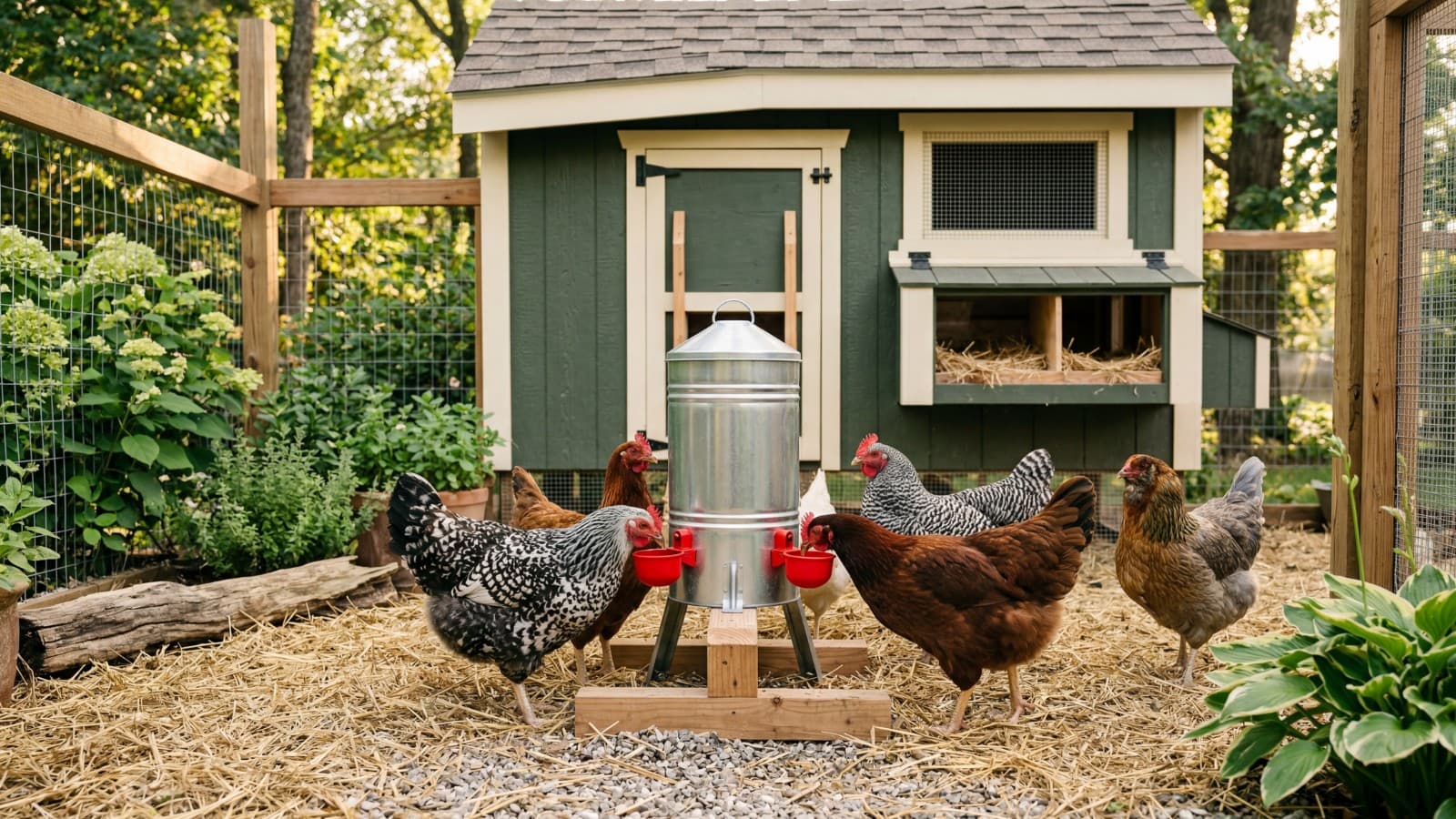
If you have a flock of 10 hens, they will consume at least 1.25 gallons of water on a standard day, and over 2.5 gallons on a hot summer afternoon. Ensure you provide multiple watering stations to prevent dominant hens from blocking submissive birds from drinking. Hydration is vital for healthy digestion and egg yolk consistency. Keep water located in a shaded area of the run to prevent it from warming up, as chickens dislike warm water and may refuse to drink it.
Clean water is also essential for a chicken's body temperature regulation. Because chickens do not sweat, they cool themselves by panting, which causes rapid moisture loss. If they do not have immediate access to cold water during hot afternoons, they can suffer from heat stroke and sudden mortality in a matter of hours.
Waterer types
There are three primary types of chicken waterers: traditional gravity cups, horizontal nipple waterers, and vertical nipple waterers. Gravity cups are easy for chickens to use but collect dirt and feces, requiring daily scrubbing. Nipple waterers are highly recommended because they are completely sealed, keeping the water sanitary. Horizontal nipples are less prone to leaking than vertical nipples and can be installed on any food-grade plastic bucket. They are highly efficient.
Horizontal nipples operate on a spring valve that releases water only when chickens peck at the steel pin. This design prevents chickens from kicking dirt and bedding into the water, and keeps the run ground dry. Plastic bucket systems are highly cost-effective and simple to construct as a DIY project. By raising the bucket on blocks or hanging it from the run rafters, you keep the drinking area at the height of the chickens' backs, which is the most ergonomic position for them.
Vertical nipples are mounted on the bottom of a bucket, requiring chickens to look up and peck downward to drink. While effective, they are more prone to leaking if dirt gets caught in the valve than horizontal nipples, which are mounted on the side. Horizontal nipples are generally preferred for backyard coop setups.
Winter waterers
Winter watering requires planning to prevent ice buildup. Heated plastic waterers or heated metal bases plugged into an outdoor outlet are the most reliable options. If you lack electricity, you must carry fresh water out twice daily, replacing frozen buckets. Black rubber bowls are helpful because they can be stepped on to break out ice blocks without damaging the bowl. Keeping the waterer inside a draft-free coop helps delay freezing. Never add salt to the water.
Avoid using open pans inside the coop, as splashing water will raise humidity levels, causing frostbitten combs and damp bedding. Thermostatically controlled heated bases consume very little electricity, turning on only when the temperature drops below 35 degrees, making them a safe winter solution. If using heated bases, ensure all cords are protected by conduit to prevent chickens or rodents from pecking through the rubber insulation.
Cleaning and placement
Hygiene is critical for preventing diseases like coccidiosis, sour crop, and intestinal worms. Clean gravity waterers daily with warm water and a scrub brush to remove algae and dirt. Once a week, sanitize the waterer using a mild bleach solution or white vinegar, rinsing it thoroughly before refilling. Place the waterer on a raised stand or hang it at back-height to prevent chickens from scratching dirt, bedding, and droppings into the water. Clean waterers support flock health.
Scrubbing away the slick bio-film that forms on the plastic surface is vital, as this film harbors harmful bacteria and pathogens. If you use apple cider vinegar to support gut health, ensure you only use it in plastic waterers, as the acid will react with and corrode metal containers, releasing toxic zinc. Regularly inspect the watering nipples for mineral buildup or leaks, clearing any clogs with vinegar to maintain steady water flow.
What to pick
For most backyard keepers, a 5-gallon plastic bucket equipped with horizontal nipple waterers is the best choice. This setup provides a clean, 5-day water supply for a flock of 6 hens, requires minimal cleaning, and is easy to construct as a DIY project. In winter, switch to a heated plastic waterer or place your bucket on a heated base to ensure your birds have constant access to water. This keeps your flock safe and reduces daily work.
For large flocks of 20 or more birds, consider installing a gravity-fed automatic cup system connected to a large rain barrel or outdoor faucet. This setup reduces daily chores significantly. Always check the valves regularly to ensure they are flowing freely and do not leak. Having a secondary waterer in the run is also a smart backup measure, ensuring that if one waterer leaks or fails, your flock remains fully hydrated.
Frequently Asked Questions
Quick, practical answers to common questions about feeding this to chickens.
About the Author

Amy Schmelter is a lifelong chicken keeper raising a large flock in Florida and the author of the upcoming book What I Wish I Knew Before Getting Chickens. She started Chicken Homestead to share what actually works.
Disclosure
Some links on Chicken Homestead may be affiliate links. We only recommend products we’d use ourselves. See our affiliate disclosure for details.