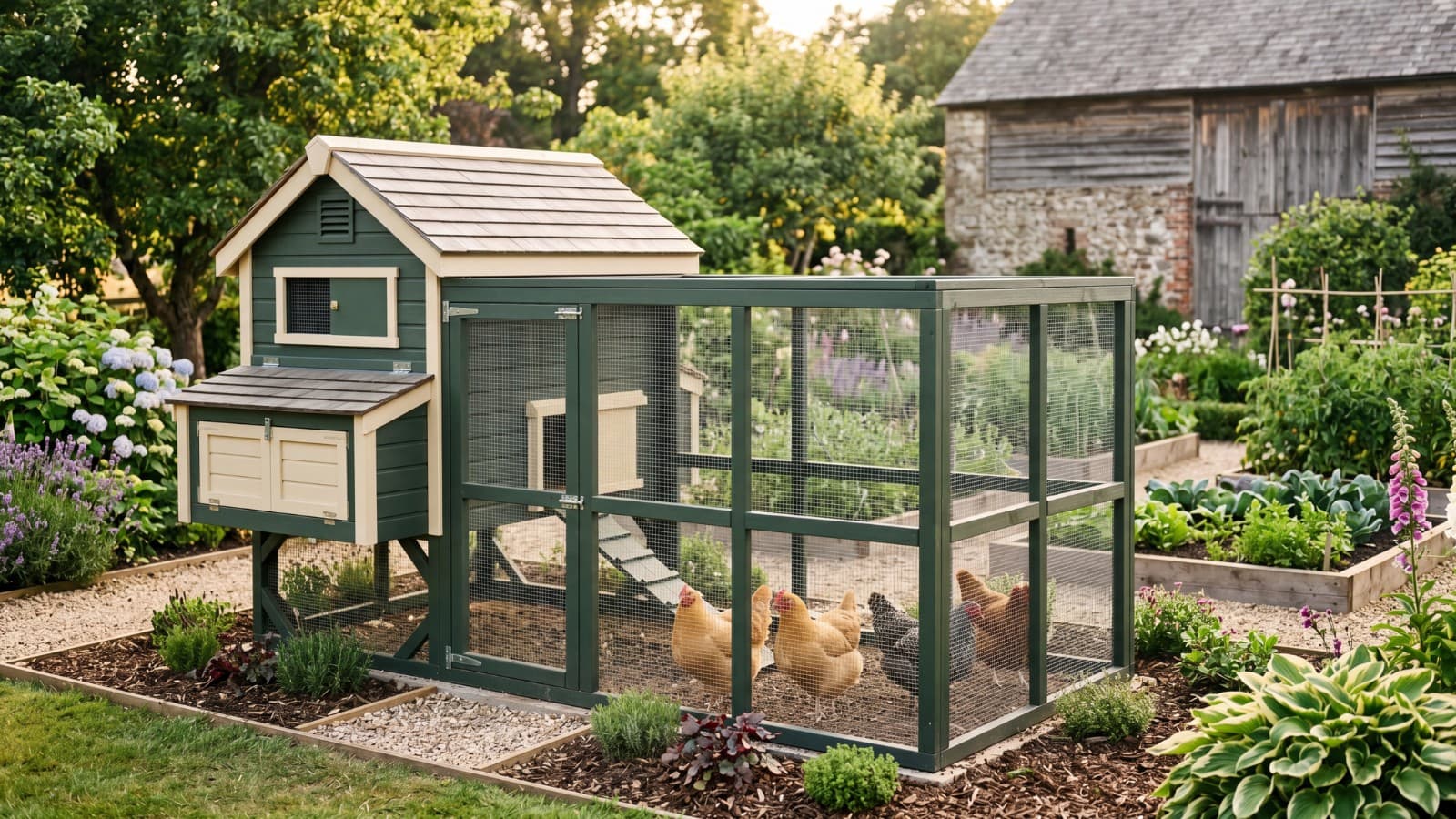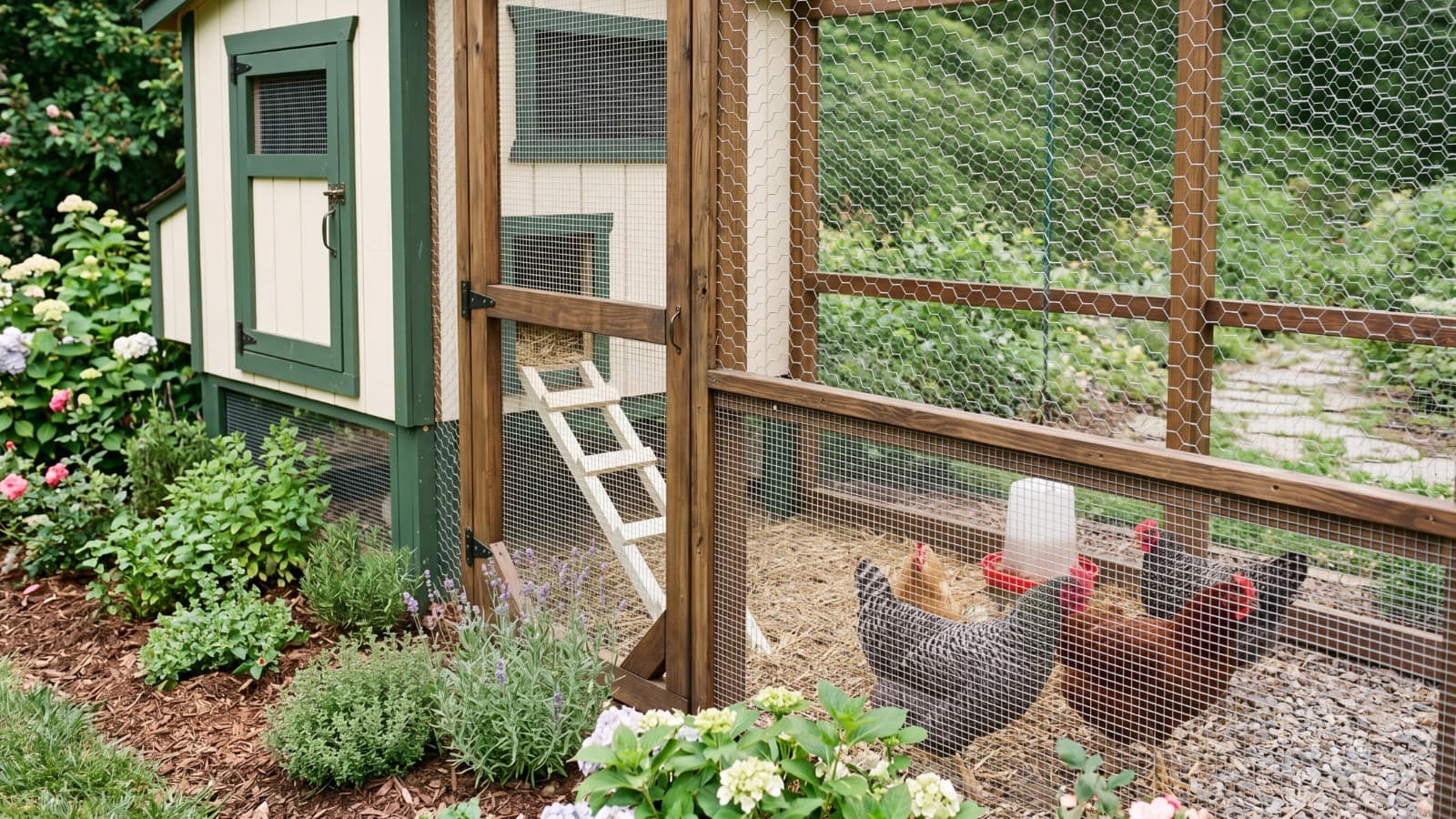
Equipping the interior of your chicken coop correctly is essential for your flock's health, safety, and comfort. A coop is more than just a wooden box; it must function as a complete home for your birds. Knowing what to put inside—and what to leave out—will prevent behavioral issues, protect your hens from predators, and make daily chores much easier. This guide details the essential interior features, roost layouts, nesting box placement, bedding choices, and ventilation design.
An organized layout ensures that feeding and cleaning areas are separated, maintaining flock hygiene. Setting up the interior correctly also saves you significant time during weekly maintenance. Let's look at the essential elements that belong inside every coop.
The essentials
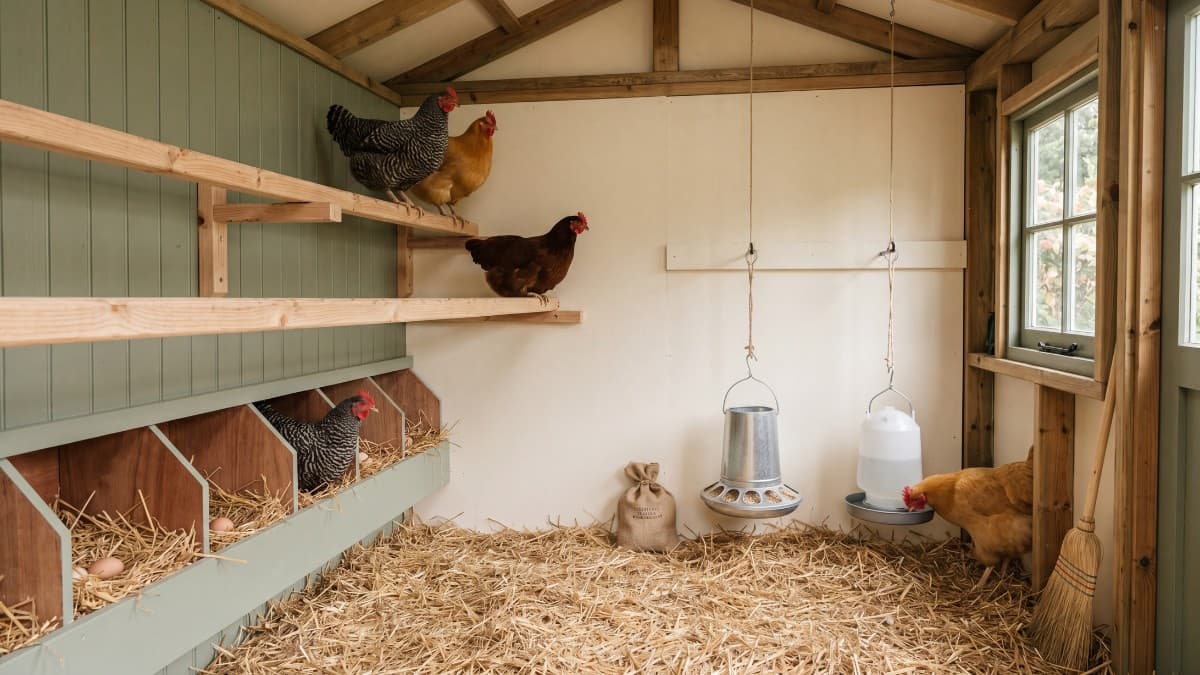
The interior of a chicken coop must include four essential elements: secure roosting bars for sleeping, comfortable nesting boxes for laying eggs, dry bedding to absorb waste, and continuous ventilation. The layout must be organized so that droppings do not contaminate feeding areas, and the nest boxes remain clean. Keep the center floor space clear to allow the birds to move around comfortably.
Every element should be designed for easy removal, which makes deep cleaning and sanitization much simpler. Avoid mounting nest boxes or roosts permanently; instead, use brackets or screws that allow you to slide them out for scrubbing.
Roosting bars
Chickens sleep on perches to stay safe from ground predators. Roosting bars should be made of 2x4 lumber with the wide side facing up and the top edges rounded. This design allows hens to sit on their feet to keep their toes warm in winter. Allow 8 to 10 inches of roost space per bird, and mount the bars at least 18 inches off the floor, keeping them higher than the nesting boxes.
Mounting a removable 'droppings board' directly underneath the roosting bars captures the majority of the night's feces. This board can be scraped clean daily using a putty knife, keeping the floor bedding clean and fresh for much longer, which significantly reduces coop odor.
Nesting boxes
Nesting boxes provide a private, dark space for hens to lay eggs. You need one 12x12 inch box for every 3 to 4 hens. Line the boxes with clean straw or wood shavings, and mount them 12 to 18 inches off the floor. Ensure the top of the nest boxes is sloped at a 45-degree angle to prevent chickens from perching and pooping on top of the nesting unit.
Keep the nests filled with fresh, dry bedding to prevent eggs from breaking. You can add aromatic herbs like lavender or mint to the nests, which naturally deters mites and keeps the area smelling fresh. Collect eggs daily to prevent egg-eating habits.
Bedding
Coop bedding absorbs moisture and droppings, keeping the environment clean. Pine shavings are the most popular choice because they are absorbent, dry quickly, and help control odors. Avoid cedar shavings, as their strong aromatic oils can damage a chicken's sensitive respiratory system. Straw is excellent for nesting boxes but can harbor mites if used on the main floor.
For a low-maintenance approach, the deep litter method allows bedding and droppings to compost slowly on the floor, generating natural heat. If you choose this method, build a high doorsill to keep 6 to 8 inches of shavings contained on the floor without spilling out.
Ventilation
Ventilation is critical for removing ammonia fumes and moisture. Vents must be placed high on the walls near the roofline, well above the roosting bars. This positioning allows warm, humid air to rise and escape without blowing cold drafts directly onto the sleeping birds. Cover all vents securely with 1/2-inch hardware cloth to prevent predator entry.
Ensure you have vents on opposite walls to encourage cross-breeze airflow. In winter, keep these high vents open; cold air is safe for chickens, but damp, humid air is highly dangerous, leading to respiratory infections and frostbitten combs.
Feeder and waterer
Place feeders and waterers in the outdoor run rather than inside the coop to keep the sleeping area dry and pest-free. If you must feed inside, hang the feeder at back-height to prevent feed wasting. Use a vertical nipple waterer to eliminate spills, and check daily that the water is clean and flowing.
Keeping water inside the coop increases humidity levels, which worsens winter cold issues. Hanging the feeder prevents chickens from scratching bedding and droppings into their feed, which helps prevent the spread of intestinal parasites like coccidiosis.
Predator protection
Every opening must be a secure barrier. Standard window screens are useless against raccoons; replace them with 1/2-inch galvanized hardware cloth screwed directly to the frame. Install heavy-duty latch systems that require two hands to open, and ensure the pop door leading to the run is locked securely every night.
Consider installing an automatic pop door that opens and closes on a timer or solar sensor, which ensures your flock is locked up safely even if you are not home at dusk. Raccoons can reach through standard chicken wire, making 1/2-inch hardware cloth essential.
Lighting
Chickens do not require artificial lighting inside the coop, as they naturally go to roost at dusk. If you use lighting to maintain winter egg production, set it on a timer to turn on in the early morning. Sunlight is the best light source, so position windows to face east or south to capture morning warmth and light.
Natural light keeps the interior dry and helps control bacteria. In summer, ensure windows can be opened for ventilation, but cover the inside securely with hardware cloth to keep predators out. Avoid leaving lights on all night, which stresses the birds.
Dust bath area
Chickens take dust baths to clean their feathers and prevent mites. While they usually bathe in the run, having a small dust bath box inside the coop is helpful in wet winter weather. Fill a shallow wooden box with a mix of dry soil, play sand, and food-grade diatomaceous earth, which naturally smothers parasites.
This activity helps them naturally shed excess skin cells and oils. Ensure the dust bath box has high sides to prevent sand from spilling onto the floor bedding. Keep it dry; wet sand is ineffective and will quickly mold in the coop environment.
Cleaning access
Design the interior for easy cleaning. A large walk-in door or a full-width clean-out hatch allows you to rake soiled bedding directly into a cart. Installing linoleum or vinyl flooring over the plywood floor protects the wood from moisture and creates a smooth, easy-to-sweep surface that does not trap odors.
Linoleum prevents droppings from sticking to the wood floor, allowing you to scrape the surface clean in minutes. Ensure you seal the edges of the linoleum with silicone caulk to prevent moisture from seeping underneath and rotting the wood platform.
What not to put inside
Never put heaters, heat lamps, or open flame devices inside a chicken coop. Heat lamps are a major fire hazard and can easily ignite dust and dry bedding. Chickens are highly cold-hardy and do not need heating. Also, avoid using plastic tarps, cedar bedding, or chemical insecticides, which are toxic and can harm your flock's health.
Heat lamps also prevent chickens from naturally adapting to winter temperatures, putting them at risk of freezing if the power cuts out during a storm. Stick to secure framing, dry bedding, and high ventilation vents to keep your flock safe.
Frequently Asked Questions
Quick, practical answers to common questions about feeding this to chickens.
About the Author

Amy Schmelter is a lifelong chicken keeper raising a large flock in Florida and the author of the upcoming book What I Wish I Knew Before Getting Chickens. She started Chicken Homestead to share what actually works.
Disclosure
Some links on Chicken Homestead may be affiliate links. We only recommend products we’d use ourselves. See our affiliate disclosure for details.