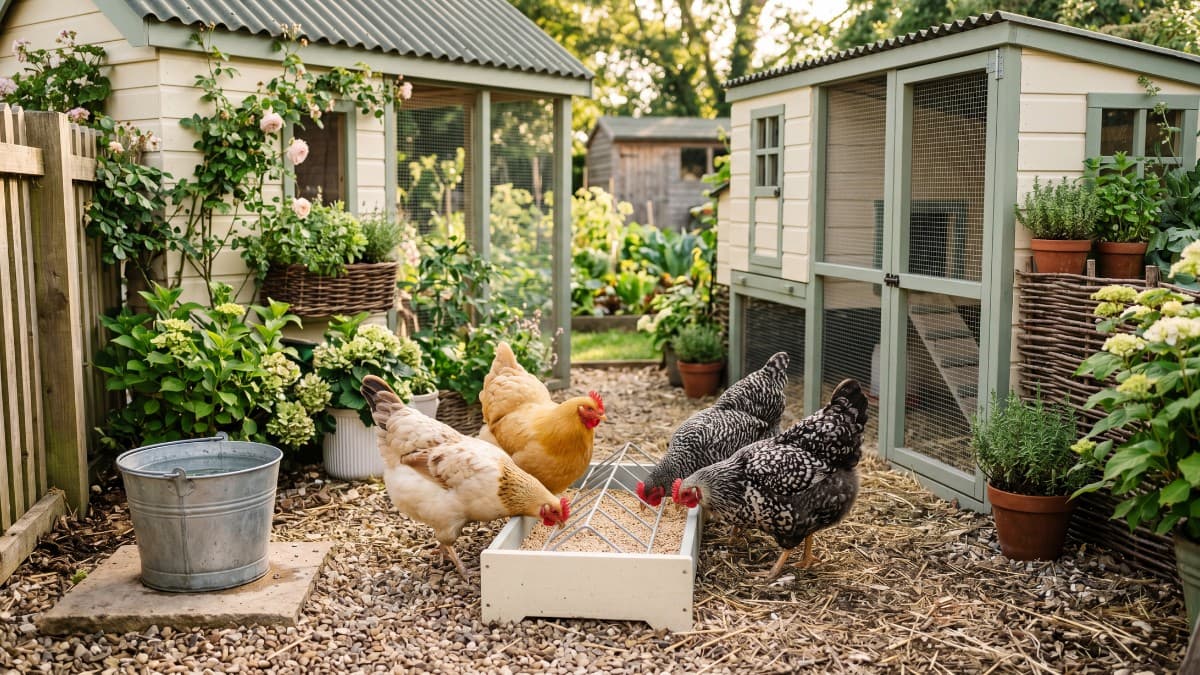
Chickens are famous for being omnivorous foragers that will eat almost anything they can find, from seeds and grasses to bugs, lizards, and kitchen scraps. However, a chicken's natural curiosity does not mean everything they peck at is safe. To maintain a healthy, productive flock, keepers must understand what chickens need for their core diet, what treats are safe to share, and what foods are toxic. This guide covers core diets, supplements, hydration, safe treats, toxic nightshade foods, and feeding routines.
The short answer
The short answer is that chickens require a complete commercial feed as their primary diet, supplemented with fresh water, grit, and oyster shell. Safe treats like leafy greens, vegetables, and small amounts of fruit can be offered as a bonus. You must avoid toxic foods like avocado, raw potatoes, onions, and raw green beans to protect your flock from accidental poisoning. Keep treats to a strict 10 percent limit of their daily intake.
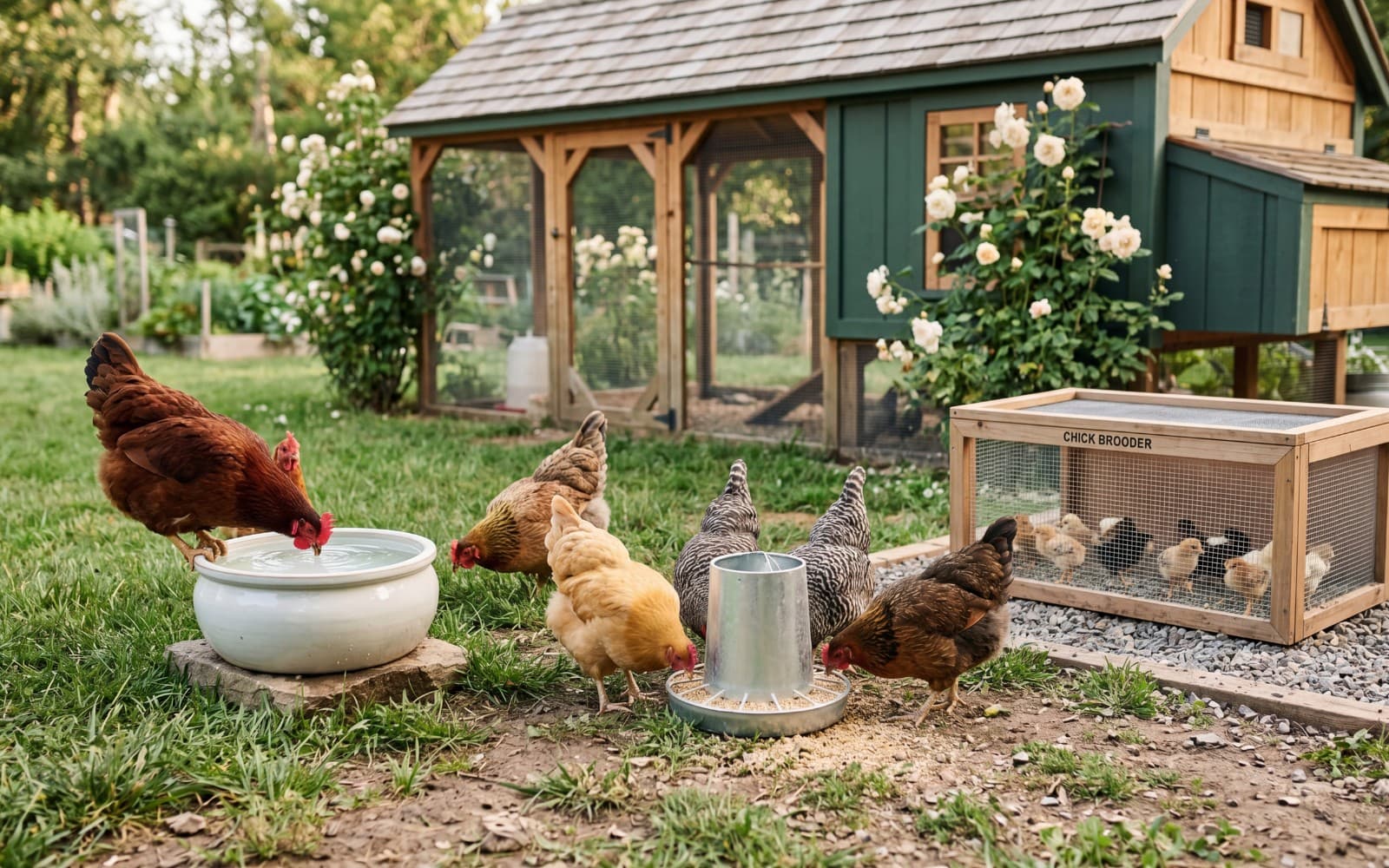
Providing a clean feeding environment is also crucial. Feeders should be raised off the ground to prevent chickens from scratching bedding and feces into their food, which spreads diseases like coccidiosis. Clean, fresh water must always be available next to the feed, as chickens will not eat dry feed if they cannot drink to help swallow it.
Complete chicken feed by life stage
A complete commercial feed is formulated by poultry nutritionists to provide the exact protein, fat, fiber, vitamins, and minerals chickens need. Chicks need starter feed (18-20% protein), pullets need grower feed (16-18% protein), and laying hens need layer feed (16% protein, 4% calcium). Feeding the correct complete feed ensures steady egg production and strong bones. Never feed layer feed to young chicks, as the high calcium will damage their kidneys.
Layer feed comes in pellets, crumbles, or mash. Pellets are the most efficient because hens cannot sort through them to eat only their favorite ingredients, ensuring balanced nutrition with every bite. Crumbles are excellent for smaller breeds or younger pullets transitioning to layer feed. Keep feed stored in metal bins with secure lids to protect it from moisture, mold, and local pests like mice.
Ensure that feed is kept in a cool, dry place to prevent mold growth. Moldy feed contains dangerous mycotoxins that cause severe respiratory and digestive issues in poultry, which can be fatal. Discard any feed that smells damp, musty, or has clumped together due to moisture.
Grit and oyster shell
Because chickens lack teeth, they swallow their food whole. They require poultry grit (small stones) which accumulates in their muscular gizzard to grind down grains and fiber. Oyster shell is a separate, vital supplement for laying hens. It provides a slow-release source of calcium needed to form hard eggshells, and should be offered free-choice in a separate container. Do not mix oyster shell directly into their feed.
If you mix it into their feed, hens may consume too much or too little, whereas offering it free-choice allows them to eat exactly what their bodies require. Grit is especially important if your chickens have access to grass, seeds, or kitchen scraps, as they cannot digest fibrous materials without stones in their gizzards. Provide chick-sized grit for young birds and standard grit for adults.
Water
Clean, fresh water must be available at all times. An adult hen drinks about 1 to 2 cups of water daily, and this amount doubles in hot weather. Water is crucial for digestion, egg formation, and temperature regulation. Place waterers in a shaded area of the run, and clean them regularly to prevent algae and bacterial growth. Splashing water inside the coop increases humidity, which causes frostbite in winter.
Using nipple waterers is a highly effective way to maintain clean water, as the system is completely sealed and prevents chickens from kicking dirt or droppings into the water. If using apple cider vinegar to support gut health, ensure you only use plastic waterers, as vinegar's acidity will corrode galvanized metal containers, releasing toxic levels of zinc into their drinking water.
Chickens also rely on water to help digest their feed, as they soften grains in their crop before digestion. A lack of water will quickly cause crop impaction, a serious health issue where feed becomes stuck in the crop. Ensure water is clean and located near their primary feeder.
Safe treats and kitchen scraps
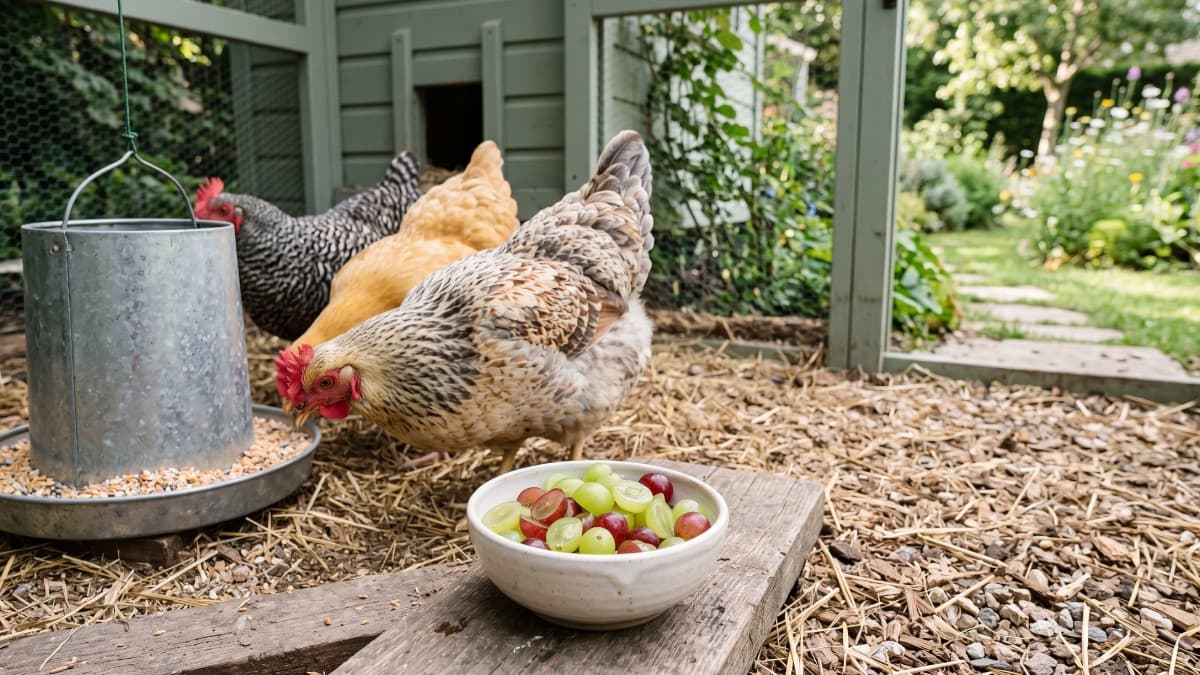
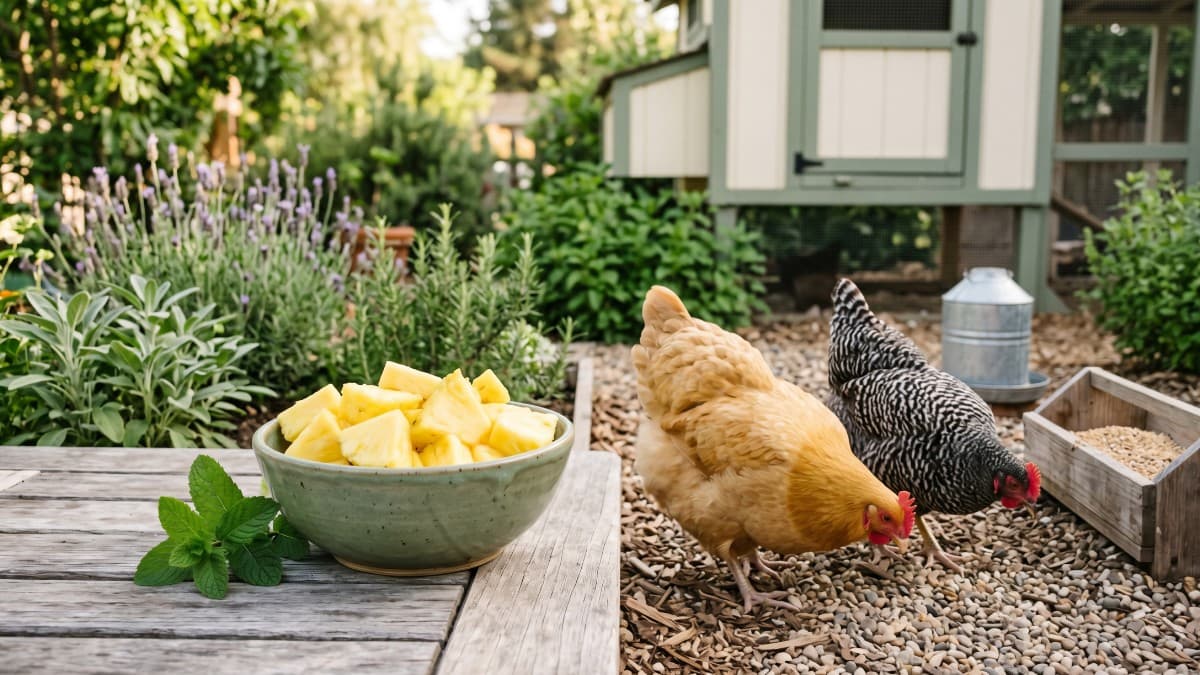
Safe treats from the kitchen and garden are a wonderful way to supplement your flock's diet and reduce waste. Excellent options include leafy greens like kale, lettuce, spinach, and chard, which provide iron and vitamins. Soft fruits like ripe tomatoes, berries, melon slices, and cored apples are highly refreshing, especially in summer. Healthy vegetables like cucumbers, zucchini, pumpkins, and squash (including the seeds) are outstanding. For protein, dried mealworms or black soldier fly larvae are excellent. Small portions of cooked grains like plain rice, oats, or pasta are also safe, provided they are plain.
Foods to avoid
You must keep several toxic foods completely away from your chickens. Avoid avocado pits and skins, which contain the toxin persin and can be fatal to birds. Green or raw potato peels contain solanine, a toxic compound that damages the nervous system. Raw, dry beans contain phytohaemagglutinin, which is highly toxic until boiled. Keep chocolate, caffeine, and alcohol out of the coop. Never feed moldy or spoiled foods, as mold spores produce mycotoxins that cause sudden death. Highly salted, sugary, or fried foods should also be avoided, along with raw whole eggs to prevent egg-eating habits.
Why treats should not replace feed
Maintaining a strict balance between primary feed and treats is essential for long-term health. High-quality commercial chicken feed is scientifically formulated to contain the exact balance of protein, calcium, vitamins, and minerals your flock needs. Table scraps, scratch grain, and fruits lack this complete nutrition. If treats make up more than 10 percent of their daily intake, hens will suffer from nutritional deficiencies, leading to thin eggshells, reduced egg laying, poor feather quality during molt, and obesity. Treats should be used as a special reward, not a primary food source.
A simple daily feeding routine
A simple daily feeding routine keeps your flock healthy: Fill feeders with layer feed in the morning, check that waterers are clean and full, and offer a small handful of treats or scratch grains in the afternoon to encourage foraging and exercise. Before dusk, check that the feed and water are clean, and ensure the coop is locked securely against nocturnal predators. Collecting eggs twice daily keeps nesting clean.
Remove any uneaten fresh treats at the end of the day to prevent them from rotting in the run or attracting rodents at night. Regularly inspect feeders for moldy feed clumps, especially after rainy weather, and sanitize them monthly. This consistent routine supports steady egg production, maintains flock hygiene, and keeps your backyard homestead running smoothly.
Regularly clean feeders and waterers to prevent the spread of diseases. Sanitizing equipment with vinegar once a week helps keep the feeding area sanitary. This simple routine is the foundation of successful flock management, keeping your birds healthy, active, and productive.
Frequently Asked Questions
Quick, practical answers to common questions about feeding this to chickens.
About the Author

Amy Schmelter is a lifelong chicken keeper raising a large flock in Florida and the author of the upcoming book What I Wish I Knew Before Getting Chickens. She started Chicken Homestead to share what actually works.
Disclosure
Some links on Chicken Homestead may be affiliate links. We only recommend products we’d use ourselves. See our affiliate disclosure for details.