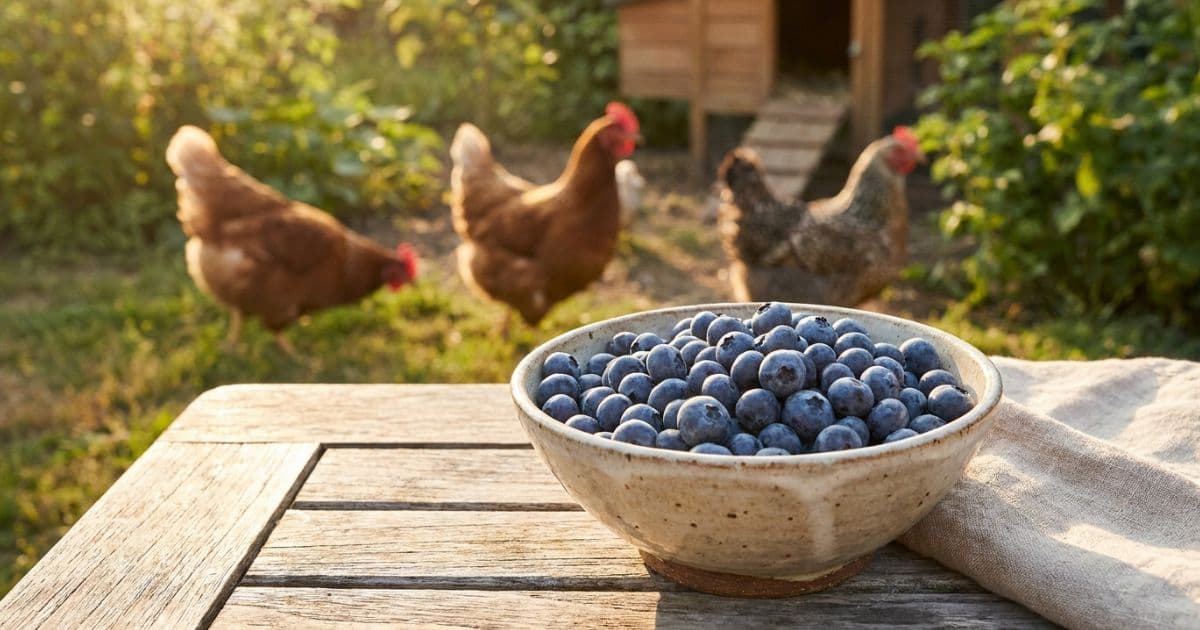
Blueberries are a safe, antioxidant-rich fruit that makes an exceptional treat for backyard chickens. Flocks absolutely love them, and they are packed with vitamins and minerals that support overall health, feather quality, and immune function. This guide explains the benefits of blueberries, how to feed them to different age groups, and how to keep treats in balance.
During the hot summer months, blueberries are a highly effective treat for keeping chickens hydrated. Their small size makes them easy to distribute, reducing resource guarding and allowing all birds in the flock to get a share.
The short answer
Yes, chickens can eat blueberries raw, fresh, or frozen. They are completely safe and highly nutritious. Keep portions under 10 percent of their daily diet, and serve them plain. For broader advice on flock nutrition, see our guide on what do chickens eat.
While healthy, blueberries contain natural sugars and should be fed as an occasional treat. They must not replace complete commercial feed, which is essential for laying hens.
Are blueberries safe for chickens?
Yes, blueberries are fully safe and healthy. They contain Vitamin C, Vitamin K, manganese, and a high concentration of antioxidants, particularly anthocyanins. Vitamin C supports the immune system, Vitamin K is vital for bone strength and blood clotting, and manganese plays a key role in eggshell formation.
Antioxidants help protect the chicken's cells from oxidative damage, which supports overall vigor and helps hens cope with stress. The moderate sugar and high water content make blueberries a healthier option than many other sweet fruits.
How to serve blueberries to your flock
Toss raw, fresh blueberries directly onto the ground or into a feeding dish. Watching chickens chase each other for berries provides excellent physical exercise and entertainment.
In the summer, frozen blueberries make a refreshing, cooling treat. You can float them in a shallow bowl of cold water, encouraging the chickens to "bob" for the berries, which helps keep them hydrated on hot days.
For young chicks under 8 weeks old, mash the blueberries slightly before serving. This prevents choking and makes it easier for them to consume. Ensure chicks have access to chick grit to help digest the fruit.
What forms of blueberries should chickens avoid?
Avoid feeding blueberry pies, jams, canned blueberries in syrup, or sweetened dried blueberries. The added sugar, preservatives, and fats in these foods can disrupt a chicken's digestive system, leading to sour crop or diarrhea.
Ensure the blueberries are fresh and free of mold. Moldy fruit contains toxins that can be fatal to poultry. If the berries are soft or slightly shriveled, they are safe, but if you see fuzzy mold, discard them.
How many blueberries can chickens eat?
A typical adult hen can eat 3 to 5 blueberries per day. Overfeeding blueberries can cause loose, dark-colored or blue-tinted droppings, which is normal but indicates they are consuming too much fruit.
Ensure that you scatter the berries widely in the run. This prevents dominant hens from hogging the treat and ensures that submissive birds also receive a portion.
Introducing blueberries to your flock
To introduce blueberries, roll a few fresh berries into the run. Chickens will naturally peck at the round objects and investigate them.
Make sure they have plenty of grit if they are young or confined to the coop, as grit is needed to process the skins of the berries.
Signs of digestive distress
Overfeeding sweet fruits can lead to watery droppings, diarrhea, or a sticky vent area. If you notice these signs, reduce the amount of fruit you are feeding.
Ensure the flock's primary diet consists of dry layer feed. If droppings remain loose or sour crop develops, withhold all treats and stick to plain water and balanced feed.
Where blueberries fit in a balanced diet
Blueberries must fit within the 10 percent treat limit. The remaining 90 percent of their daily intake must consist of complete commercial layer feed. For a complete schedule of age-appropriate feed, view our chicken feed guide by age.
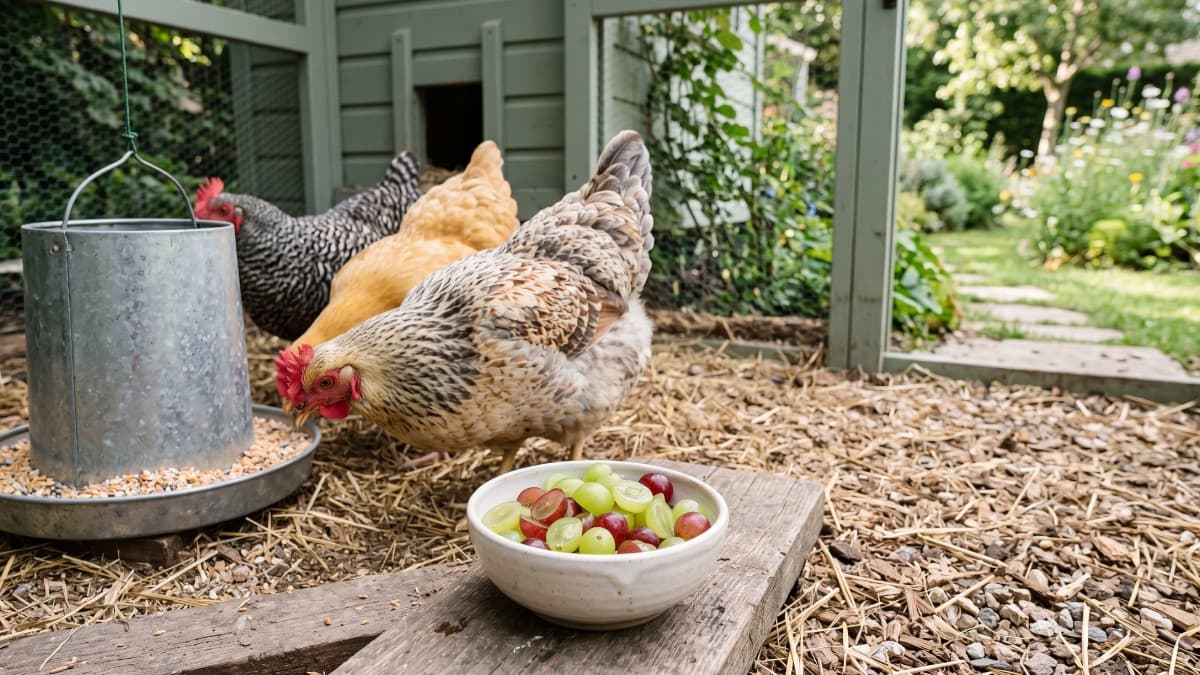
Maintaining this balance ensures they receive the calcium and protein required for strong eggshells and daily health. For other berry safety guides, see can chickens eat strawberries and can chickens eat grapes.
Frequently Asked Questions
Quick, practical answers to common questions about feeding this to chickens.
About the Author

Amy Schmelter is a lifelong chicken keeper raising a large flock in Florida and the author of the upcoming book What I Wish I Knew Before Getting Chickens. She started Chicken Homestead to share what actually works.
Disclosure
Some links on Chicken Homestead may be affiliate links. We only recommend products we’d use ourselves. See our affiliate disclosure for details.