Grapes are a highly favored and hydrating treat for backyard chickens, especially during the hot summer months. They are sweet, juicy, and packed with beneficial vitamins that support flock health and vitality. However, because their round shape and smooth skin pose a physical choking hazard, keepers must prepare grapes correctly before offering them to their birds. Offering grapes without slicing can lead to accidental suffocation, especially in greedy or young birds. This guide explores the nutritional benefits of grapes, explains the specific physical hazards, lists safe parts of the grapevine, and discusses how to feed them in moderation to prevent crop and digestive distress.
The short answer
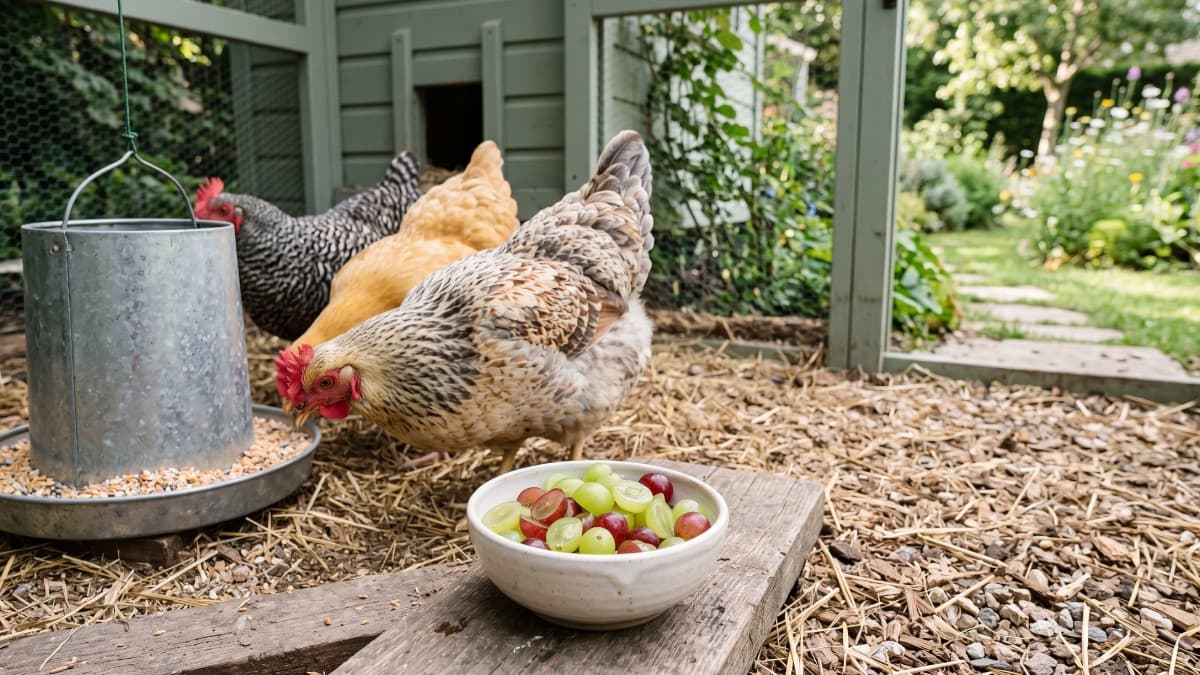
Yes, chickens can eat grapes, including the flesh, skin, and seeds. However, you must always slice grapes in half or quarters before serving them to prevent choking. Grapes are a sweet, hydrating treat that should be fed in moderation as part of their 10 percent treat allowance. Leaving grapes whole is a risk because chickens lack teeth and will attempt to swallow the fruit in one piece, leading to blockages in the throat or crop. By cutting the grapes, you not only make them safe to swallow but also ensure that the juicy, soft interior is immediately accessible to your hens, allowing even submissive birds to grab a quick bite without struggle.
What grapes offer
Grapes are a rich source of Vitamin C, Vitamin K, and several essential minerals like potassium and copper. Vitamin C supports the immune system, helping chickens manage heat stress and resist seasonal diseases, while Vitamin K is vital for bone strength and proper blood clotting. Grapes also contain powerful antioxidants, such as resveratrol, which help protect cells from oxidative damage and support overall flock vigor. Because grapes are about 80 percent water, they are also an excellent hydrating snack that helps lower their core body temperature on hot summer days, keeping your flock active and comfortable during heatwaves. The natural sugars provide a quick, healthy boost of energy for active foragers.
Choking risk and how to serve safely
The round, slippery nature of grapes makes them a major choking hazard for chickens, who will often try to swallow them whole in a rush to beat their flockmates to the treat. If a grape gets stuck in a chicken's throat, it can block their airway, leading to rapid suffocation. To prevent this, always cut grapes lengthwise into halves or quarters before throwing them into the run. Slicing lengthwise ensures the pieces are narrow and easy to pass down the esophagus. For young chicks, mash the grapes completely into a wet pulp. Slicing also exposes the juicy flesh, making it easier for the birds to peck at and preventing fights over a single whole fruit, which can cause injury in a competitive flock.
Sugar and moderation
While grapes are highly nutritious, they contain high levels of natural sugars, primarily fructose and glucose. Overfeeding sugary foods can disrupt the bacterial balance in a chicken's crop, leading to yeast overgrowth and a painful condition known as sour crop. It can also cause watery droppings, diarrhea, and general digestive upset. Limit grapes to an occasional snack rather than a daily feed, ensuring they remain a small supplement to their diet. This portion control helps keep their digestive systems running smoothly. A healthy crop requires a balanced pH, which is easily disrupted by excessive sugar intake, so avoid offering sweet treats more than two or three times a week.
What parts are safe
All parts of the grape plant are safe for chickens to consume. This includes the sweet inner flesh, the skin, the non-toxic seeds, and even the grape leaves and vines. Grape leaves are actually a highly nutritious green that is rich in fiber, Vitamin A, and Vitamin C. If you grow grapes in your garden, you can safely toss pruned leaves and vines into the chicken run for them to forage on, providing both nutrition and physical activity. The vines themselves are fibrous, which chickens will peck at for environmental enrichment, helping prevent boredom-induced behaviors like feather-picking or bullying within the coop. It serves as a great, zero-waste backyard resource.
How many grapes per chicken
A good serving size is about 1 to 2 sliced grapes per adult hen, served two to three times a week. When distributing grapes, make sure to scatter them widely across the run. This prevents dominant hens from hoarding all the fruit and ensures that submissive birds also receive their fair share of the treat. Monitor the flock while they eat, and remove any leftover pieces after a few hours to prevent them from attracting pests or spoiling. Keeping treats scattered encourages natural scratch behavior, which keeps their minds active and sharp. Regular scattering of treats is a great way to bond with your birds and build trust.
When to avoid grapes
Never feed moldy, shriveled, or fermenting grapes to your chickens. Moldy fruit can harbor harmful mycotoxins that cause severe respiratory issues, liver damage, or sudden death in poultry. Fermenting grapes contain alcohol, which is highly toxic to birds and can cause neurological damage, loss of coordination, or liver failure. If grapes are no longer fit for human consumption due to spoilage, they should be thrown in the compost rather than fed to your flock. Your chickens rely on you to provide safe, clean food sources, and feeding them moldy kitchen scraps can lead to severe flock health issues.
Where treats fit in a balanced diet
Grapes should make up only a small fraction of the 10 percent treat allowance. The remaining 90 percent of their daily intake must consist of complete commercial layer feed to maintain the correct protein and calcium ratios. For details on feed schedules, view our chicken feed guide by age.
Providing a balanced diet prevents deficiencies that can lead to thin eggshells, egg binding, or reduced laying. If you are looking for other safe, nutrient-dense treats to vary your flock's diet, read our guides on can chickens eat apples and can chickens eat blueberries. Maintaining this balance is key to flock longevity and health.
Frequently Asked Questions
Quick, practical answers to common questions about feeding this to chickens.
About the Author

Amy Schmelter is a lifelong chicken keeper raising a large flock in Florida and the author of the upcoming book What I Wish I Knew Before Getting Chickens. She started Chicken Homestead to share what actually works.
Disclosure
Some links on Chicken Homestead may be affiliate links. We only recommend products we’d use ourselves. See our affiliate disclosure for details.