Broccoli is a popular, highly nutritious cruciferous vegetable that makes an outstanding treat for backyard chickens. Rich in essential vitamins, minerals, and antioxidants, it provides several health benefits that support flock longevity, feather quality, and egg production. This guide details how to serve broccoli safely, prepare the tough stems, and keep treats in balance.
Backyard flocks are naturally curious and enjoy the physical challenge of pecking at textures like broccoli crowns. Offering brassicas also helps simulate natural foraging, which reduces stress and prevents coop boredom, particularly during the winter months when pasture is scarce. Incorporating fresh broccoli into their routine is a simple way to improve their welfare.
The short answer
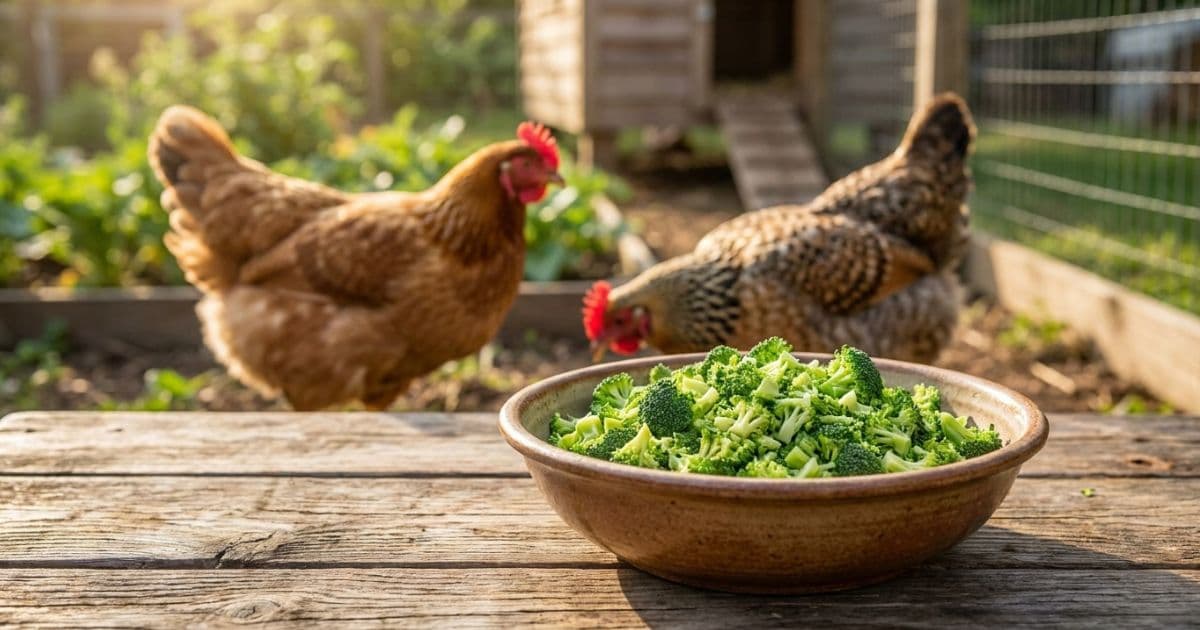
Yes, chickens can eat broccoli raw or cooked. The florets, leaves, and stalks are all safe for poultry to consume. You should cut the tough stems into small, digestible pieces to prevent crop issues, and serve the broccoli completely plain. Learn more about safe flock treats by reading our guide on what do chickens eat.
While broccoli is non-toxic and healthy, it remains a supplemental treat rather than a substitute for commercial feed. Overfeeding broccoli can lead to nutritional imbalances and digestive upset, so portion control is necessary. Keep portions small and prioritize their main feed to ensure they receive a balanced diet.
Is broccoli safe for chickens?
Broccoli is packed with Vitamin K, which is essential for blood clotting and bone health, and Vitamin A, which supports respiratory health and immune function. It is also an excellent source of Vitamin C, folate, iron, potassium, and dietary fiber. These nutrients help hens maintain strong bones, rebuild feathers during the annual molt, and produce eggs with firm shells.
The antioxidants found in broccoli, including carotenoids and lutein, help reduce cell damage and support overall flock vigor. Lutein also naturally deepens the color of egg yolks, giving them a rich, dark orange appearance that many keepers prefer. The fiber content in broccoli supports healthy digestion and a balanced gut microbiome.
Cruciferous vegetables like broccoli contain mild organic compounds called goitrogens. In massive quantities, goitrogens can interfere with thyroid function and calcium absorption. However, when fed in moderation as an occasional treat, the concentration is far too low to cause any health issues.
How to serve broccoli to your flock
Raw broccoli is highly recommended because its firm texture encourages active pecking. You can hang a whole raw head of broccoli from the top of the run using a rope or a veggie skewer, creating a fun, swinging toy that keeps the birds active and entertained. Alternatively, you can toss fresh florets directly onto the ground to encourage natural foraging behaviors in the dirt.
Cooked broccoli is softer and may be preferred by older hens or birds recovering from illness. You can steam or boil broccoli until it is tender, but you must ensure it has cooled down completely to room temperature before serving. Never serve hot food, as it can burn a chicken's sensitive crop.
Because broccoli stems are woody and fibrous, you should grate them or slice them into thin, bite-sized pieces. Slicing prevents the birds from swallowing large, hard chunks that could get stuck in their digestive tracts.
What parts of broccoli should chickens avoid?
All parts of the broccoli plant—including the florets, leaves, and stalks—are safe for chickens. However, you must avoid feeding broccoli that has been cooked with salt, butter, oil, garlic, or onions. Excess sodium is highly toxic to chickens and can lead to kidney failure, while fats can cause fatty liver disease. Garlic and onions contain compounds that can cause hemolytic anemia in birds if fed in large amounts.
Never feed moldy, rotting, or chemically treated broccoli to your chickens. Mold spores contain harmful mycotoxins that can cause severe respiratory issues or sudden death in poultry. If the vegetable is no longer fit for human consumption due to spoilage, it should be composted rather than fed to your flock.
How much broccoli can chickens eat?
Offer broccoli as an occasional treat rather than a daily feed. A good serving size is one or two small florets or a tablespoon of grated stem per adult hen, served two to three times a week. This portion size ensures they enjoy the nutritional benefits of the vegetable without diluting their primary nutrient intake.
Monitor the run after feeding broccoli. If you notice any leftover pieces after a few hours, clean them up to avoid attracting flies, rodents, or other pests to the coop. Leftovers can also sour quickly in warm weather, creating a health hazard if consumed later.
Introducing broccoli to your flock
When introducing broccoli to your chickens for the first time, start with a very small portion—such as a single shredded floret mixed in with their regular feed. This allows their digestive systems to adapt to the new fiber source and gives them a chance to try the flavor. Some chickens may be suspicious of the new food at first, but they will usually copy other hens once one starts pecking at it.
Avoid introducing multiple new foods at the same time. This makes it easier to identify the cause if any bird experiences a negative reaction or digestive upset.
Signs of digestive distress
While broccoli is safe, overeating cruciferous vegetables can cause gas and mild diarrhea in poultry. Watch for signs of digestive distress, such as loose, watery droppings or a sudden drop in egg production. If you notice these symptoms, remove any remaining broccoli immediately and stick strictly to their commercial feed for a few days.
Ensure that your chickens always have access to clean, fresh water, which is crucial for moving fibrous foods through their digestive systems. If a hen appears lethargic or has a hard, swollen crop, she may be experiencing an impacted crop, which requires immediate care.
Where broccoli fits in a balanced diet
To maintain flock health, you must strictly follow the 90/10 rule: at least 90 percent of a chicken's daily food intake must come from a complete, nutritionally balanced commercial feed. Treats like broccoli, scratch, and kitchen scraps must make up no more than 10 percent of their diet. For a detailed breakdown of flock nutritional requirements by age, view our chicken feed guide by age.
Providing a balanced diet prevents deficiencies that can lead to thin eggshells, egg binding, or reduced laying. If you are looking for other safe, nutrient-dense treats to vary your flock's diet, read our guides on can chickens eat apples and can chickens eat grapes.
Frequently Asked Questions
Quick, practical answers to common questions about feeding this to chickens.
About the Author

Amy Schmelter is a lifelong chicken keeper raising a large flock in Florida and the author of the upcoming book What I Wish I Knew Before Getting Chickens. She started Chicken Homestead to share what actually works.
Disclosure
Some links on Chicken Homestead may be affiliate links. We only recommend products we’d use ourselves. See our affiliate disclosure for details.