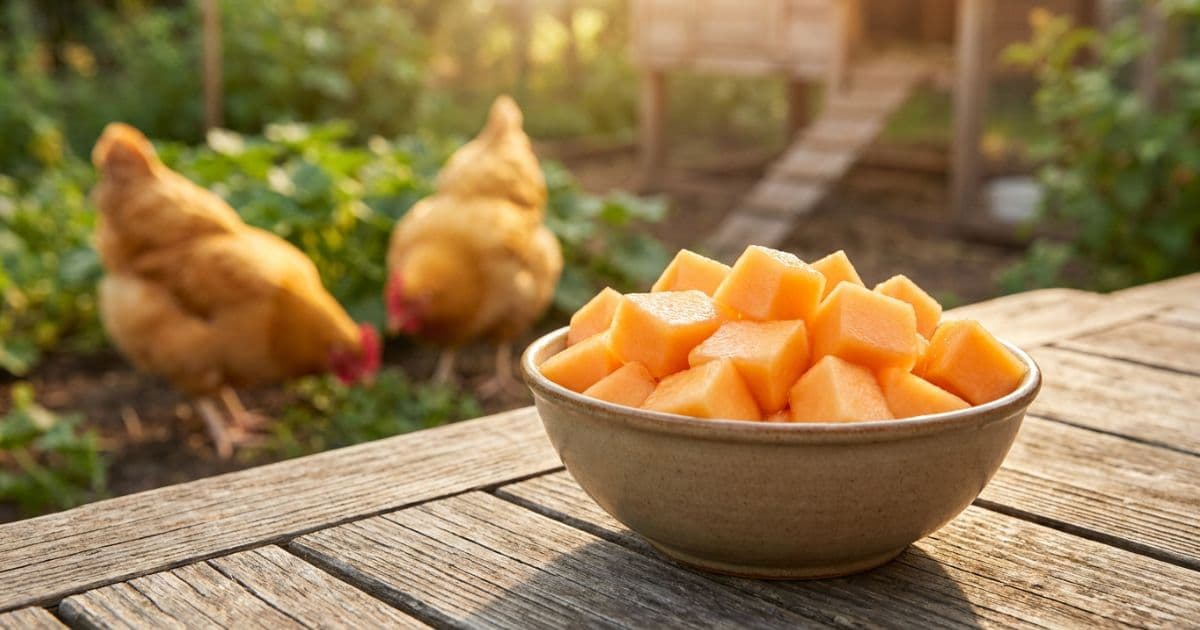
Cantaloupe is a refreshing, highly hydrating melon that makes an excellent treat for backyard chickens. Flesh, seeds, and rinds are all safe for poultry to consume, making it a zero-waste treat. This guide covers the nutritional benefits of cantaloupe, how to serve the seeds and rind, and how to use melons to help your flock cope with summer heat stress.
Melons are a favorite among chickens, and they will peck a cantaloupe rind completely clean. Feeding them cantaloupe provides mental stimulation and keeps them occupied, reducing feather pecking and other negative behaviors.
The short answer
Yes, chickens can eat cantaloupe. The sweet flesh, soft seeds, and tough rinds are all safe and nutritious for your flock. Serve it raw and plain, and remove any uneaten pieces before they spoil. To learn more about safe flock feeding practices, read our guide on what do chickens eat.
Although cantaloupe is safe and healthy, it should still be fed in moderation. It is high in water and contains natural sugars, so it must remain an occasional treat rather than a feed replacement.
Is cantaloupe safe for chickens?
Yes, cantaloupe is safe and highly beneficial. It is rich in Vitamin A (via beta-carotene), Vitamin C, potassium, and dietary fiber. Vitamin A supports vision and respiratory health, Vitamin C helps the immune system, and potassium is essential for muscle function and heat tolerance.
The seeds are soft, easy to digest, and contain protein and healthy fats that support feather health. The high water content (around 90 percent) makes cantaloupe a great hydrating snack during hot weather, helping prevent heat stroke in laying hens.
How to serve cantaloupe safely to your flock
You can cut a cantaloupe in half and place the halves directly in the run. The chickens will peck at the sweet flesh, scoop out the seeds, and scrape the rind clean. This serves as a great natural activity that keeps the birds busy.
During hot summer days, you can freeze cantaloupe slices or rind sections. Toss the frozen pieces into the run to provide a cooling, icy snack that helps lower their body temperature and keeps them hydrated.
Always wash the outer skin of the melon thoroughly before cutting it, as dirt or bacteria on the rind can be transferred to the flesh.
What parts of cantaloupe should chickens avoid?
All parts of the cantaloupe—flesh, seeds, and rind—are safe for chickens. However, you must avoid feeding melons that have begun to ferment, sour, or develop mold. Moldy food contains toxins that can cause respiratory issues or botulism in poultry.
Avoid feeding cantaloupe that has been prepared with added sugar, salt, or alcohol (such as melon balls from a party tray). Keep the treats plain and natural.
How much cantaloupe can chickens eat?
A good serving size is one small slice of melon or a few scoopfuls of seeds and pulp per adult hen, two or three times a week. Overfeeding watery fruits like cantaloupe can cause watery droppings, which can mess up the coop bedding.
Clean up the leftovers at the end of the day. Sweet melon rinds attract flies, wasps, ants, and mice, and can develop mold quickly in hot weather.
Introducing cantaloupe to your flock
To introduce cantaloupe, slice a small piece of rind with some flesh attached and place it in their run. Once one chicken starts pecking at the seeds, the others will quickly join.
Make sure to feed melons on dry ground or in a shallow dish to keep it clean.
Signs of digestive distress
Because of its high water content, overfeeding cantaloupe can cause watery stools or temporary diarrhea. If you notice wet bedding or very loose droppings in the coop, reduce the portion sizes immediately.
Ensure they are consuming their dry feed as their main food source. If loose stools persist after withholding treats, consult an avian specialist.
Where cantaloupe fits in a balanced diet
Cantaloupe must fit within the 10 percent treat limit. The remaining 90 percent of their daily diet must consist of complete commercial layer feed to maintain the correct protein and calcium levels. For details on age-appropriate diets, read our chicken feed guide by age.
Ensuring your flock receives balanced nutrition supports consistent laying and overall flock health. For other treat safety guides, see can chickens eat cabbage and can chickens eat mango.
Frequently Asked Questions
Quick, practical answers to common questions about feeding this to chickens.
About the Author

Amy Schmelter is a lifelong chicken keeper raising a large flock in Florida and the author of the upcoming book What I Wish I Knew Before Getting Chickens. She started Chicken Homestead to share what actually works.
Disclosure
Some links on Chicken Homestead may be affiliate links. We only recommend products we’d use ourselves. See our affiliate disclosure for details.