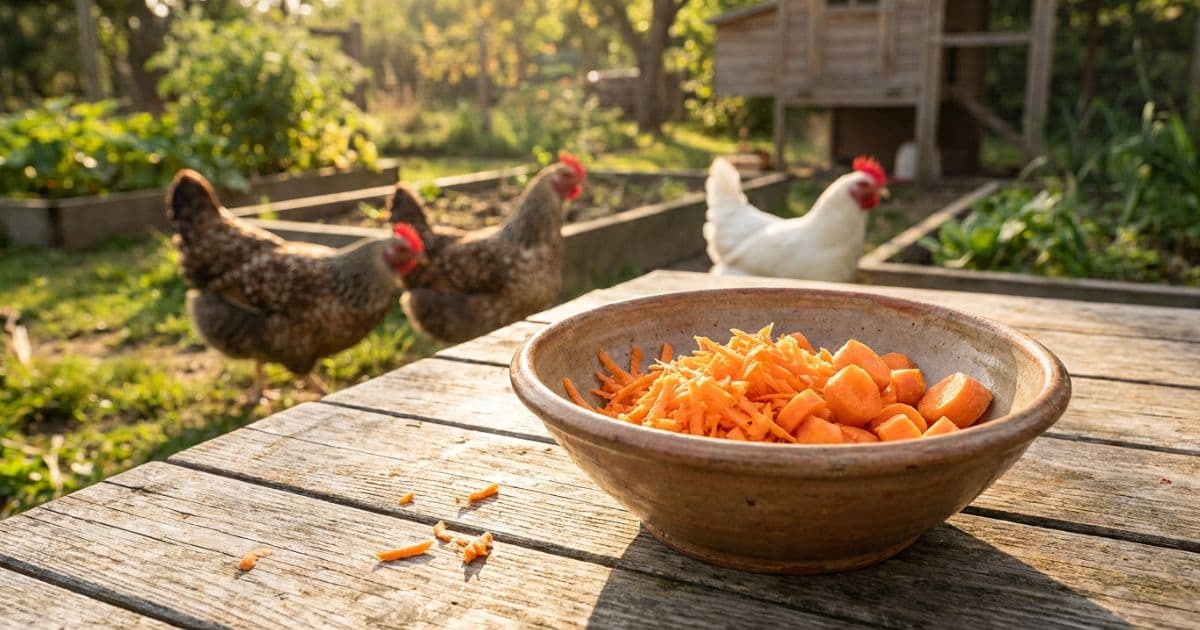
Carrots are a crisp, nutrient-dense root vegetable that makes an outstanding treat for backyard chickens. Low in sugar and packed with beneficial vitamins and minerals, they support flock health, eye function, and feather condition. This guide covers how to serve carrots safely, the benefits of carrot leaves, and how to avoid choking hazards in your flock.
Chickens enjoy pecking at colorful vegetables, and carrots provide a safe, low-calorie option that keepers can feed without worrying about obesity. Incorporating carrots into their diet is an easy way to enrich their environment.
The short answer
Yes, chickens can eat carrots. Both the root and the green tops are safe and highly nutritious. Serve carrots raw and grated, or cooked and mashed, and keep them plain. For more information on safe treats, see our guide on what do chickens eat.
Ensure that carrots are served in moderation as an occasional snack. They are healthy, but they cannot replace the balanced nutrition provided by complete commercial feeds.
Are carrots safe for chickens?
Yes, carrots are safe and packed with beta-carotene (which the body converts to Vitamin A), Vitamin K, Vitamin B6, potassium, and dietary fiber. Vitamin A supports eye health and immune function, Vitamin K is vital for bone strength, and B6 helps with metabolic function.
The beta-carotene in carrots also helps darken egg yolk color, producing rich, orange yolks. Carrot greens are also highly nutritious, containing calcium, iron, and Vitamin C, which support eggshell strength and flock vigor.
How to serve carrots to your flock
Raw carrots are very hard, so you should grate them or slice them into thin ribbons before serving. Grating prevents choking and makes it easy for birds of all sizes to swallow the vegetable.
You can also feed cooked carrots, which are soft and easy to digest. Steam or boil the carrots plain in water without adding salt, butter, or oil. Allow them to cool completely to room temperature, and mash them slightly before serving.
Carrot tops (the leafy greens) can be fed fresh and whole. Wash them thoroughly to remove dirt and compost, and toss them directly into the run.
What parts of carrots should chickens avoid?
You should avoid feeding whole raw carrots. Because chickens lack teeth, they will struggle to break down whole carrots, which can lead to crop blockages or choking if they swallow a large chunk.
Avoid carrots that have been cooked with salt, butter, brown sugar, or honey. High levels of sodium can cause kidney failure in poultry, and added sugars can cause digestive upset and sour crop.
How much carrot can chickens eat?
A good portion size is about one tablespoon of grated raw carrot or cooked mashed carrot per adult hen, two or three times a week. You can also offer a small bunch of carrot greens for the flock to peck at.
Clean up any leftover carrot pieces at the end of the day. Leftover grated carrots will dry out or spoil in the run, which can attract flies and rodents.
Introducing carrots to your flock
To introduce carrots, scatter a tablespoon of raw grated carrot in their run on top of a flat board or in a shallow tray. The bright orange color will draw their attention.
Ensure they have access to grit to process the fiber in raw carrots.
Signs of digestive distress
If you feed too many carrots, the high fiber can cause loose droppings or mild diarrhea. If droppings become watery or you notice uneaten carrot molding in the coop, reduce the portion sizes.
Always prioritize their commercial layer feed.
Where carrots fits in a balanced diet
Carrots must fit within the 10 percent treat limit. The remaining 90 percent of their daily intake must consist of complete commercial layer feed. For a complete schedule of age-appropriate feeds, read our chicken feed guide by age.
Prioritizing complete feed ensures they receive the calcium and protein needed for consistent egg production. For other treat safety guides, see can chickens eat potatoes and can chickens eat avocado.
Frequently Asked Questions
Quick, practical answers to common questions about feeding this to chickens.
About the Author
Amy Schmelter is a lifelong chicken keeper raising a large flock in Florida and the author of the upcoming book What I Wish I Knew Before Getting Chickens. She started Chicken Homestead to share what actually works.
Disclosure
Some links on Chicken Homestead may be affiliate links. We only recommend products we’d use ourselves. See our affiliate disclosure for details.