Feed oranges to chickens only in tiny, occasional amounts. Citrus fruits like oranges are non-toxic, but they are not an ideal treat for poultry. The high acidity of citrus can cause digestive distress, and there is concern that citric acid can interfere with calcium absorption in laying hens. This guide covers how to handle oranges safely, which parts to avoid, and why they should remain a rare exception.
Chickens are sensitive to strong smells and tastes, and many will naturally refuse to eat oranges. If your flock ignores citrus scraps, it is best to respect their instinct and offer other, more suitable fruits.
The short answer
Oranges are safe in very small amounts, but they are not recommended as a regular treat. Only feed the inner flesh, and do not be surprised if your chickens refuse to eat it. For healthier and more appealing treat options, read our guide on what do chickens eat.
Because of the high acidity and sugar content, oranges should be fed sparingly. They should never make up a significant portion of their daily diet or replace balanced feed.
Are oranges and other citrus safe for chickens?
Citrus is non-toxic, but the high levels of citric acid can irritate the lining of a chicken's crop and gizzard, leading to digestive upset and loose droppings. In addition, citric acid can bind with calcium in the bird's digestive tract, reducing calcium absorption. Over time, this can lead to thin eggshells or egg binding in laying hens.
Oranges also contain natural sugars that, in excess, can disrupt the bacterial balance in the crop. While a single piece of orange flesh is unlikely to harm a healthy hen, citrus should never be fed in large amounts or on a regular basis.
How to serve oranges to your flock
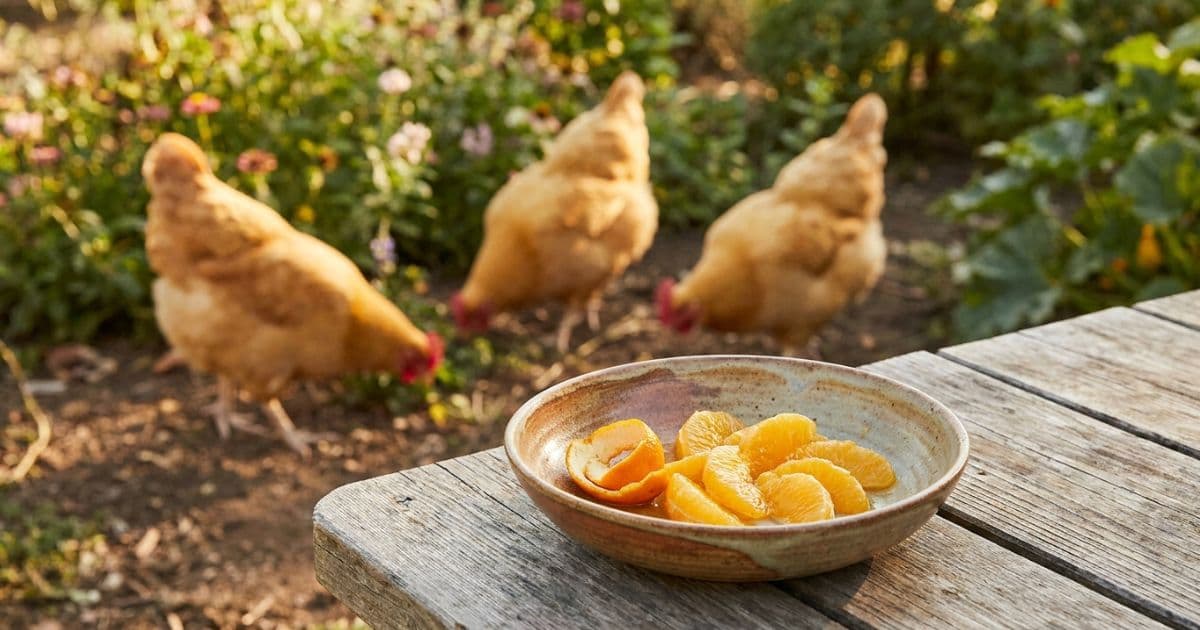
If you choose to feed oranges, always peel the fruit first. Offer only small pieces of the inner flesh, removing the seeds if possible.
Never toss whole orange halves or unpeeled wedges into the coop. The birds will struggle to peck through the tough peel, and the essential oils in the skin can cause irritation if they come into contact with their beaks or eyes.
Serve the orange flesh completely plain, without any added sugar, syrup, or seasonings.
What parts of oranges should chickens avoid?
You must avoid feeding orange peels entirely. They are extremely tough, bitter, and contain D-limonene and other essential oils that can irritate a chicken's digestive system. Peels also pose a risk of crop impaction if swallowed in large pieces.
Avoid feeding orange juice, which is highly concentrated in sugar and acid, lacking the fiber of the whole fruit. Sweetened canned oranges, marmalades, or orange-flavored desserts are also unsafe due to their high sugar and preservative content.
How much orange can chickens eat?
Limit oranges to one small segment of flesh per hen, once a week at most. If you have a small flock, a single orange slice shared among them is more than enough.
Clean up any uneaten orange flesh from the run within a few hours. Leftover fruit will spoil quickly, attract flies and yellowjackets, and can develop mold that is toxic to birds.
Introducing oranges to your flock
If you want to offer orange flesh, place a single small piece of pulp in a dish and observe their reaction. Many chickens will inspect the fruit and walk away due to the strong smell.
If they do eat it, monitor them to ensure it does not cause loose, watery droppings. Never feed oranges to young chicks.
Signs of distress
Overfeeding citrus can cause symptoms of acid irritation, such as watery droppings, loss of appetite, or lethargy. In laying hens, it can also lead to weak, soft, or thin-shelled eggs.
If you notice any of these signs, stop offering citrus immediately. Provide plain water and fresh layer feed, and ensure they have access to free-choice oyster shell to help restore their calcium levels.
Where oranges fit in a balanced diet
Oranges must fit within the 10 percent treat limit. The remaining 90 percent of their daily intake must consist of complete commercial layer feed to maintain the calcium and protein levels needed for strong eggshells. For details on age-appropriate diets, read our chicken feed guide by age.
Ensuring your hens receive balanced nutrition is vital for their health. For better, highly favored treats, read our guides on can chickens eat bananas and can chickens eat apples.
Frequently Asked Questions
Quick, practical answers to common questions about feeding this to chickens.
About the Author

Amy Schmelter is a lifelong chicken keeper raising a large flock in Florida and the author of the upcoming book What I Wish I Knew Before Getting Chickens. She started Chicken Homestead to share what actually works.
Disclosure
Some links on Chicken Homestead may be affiliate links. We only recommend products we’d use ourselves. See our affiliate disclosure for details.