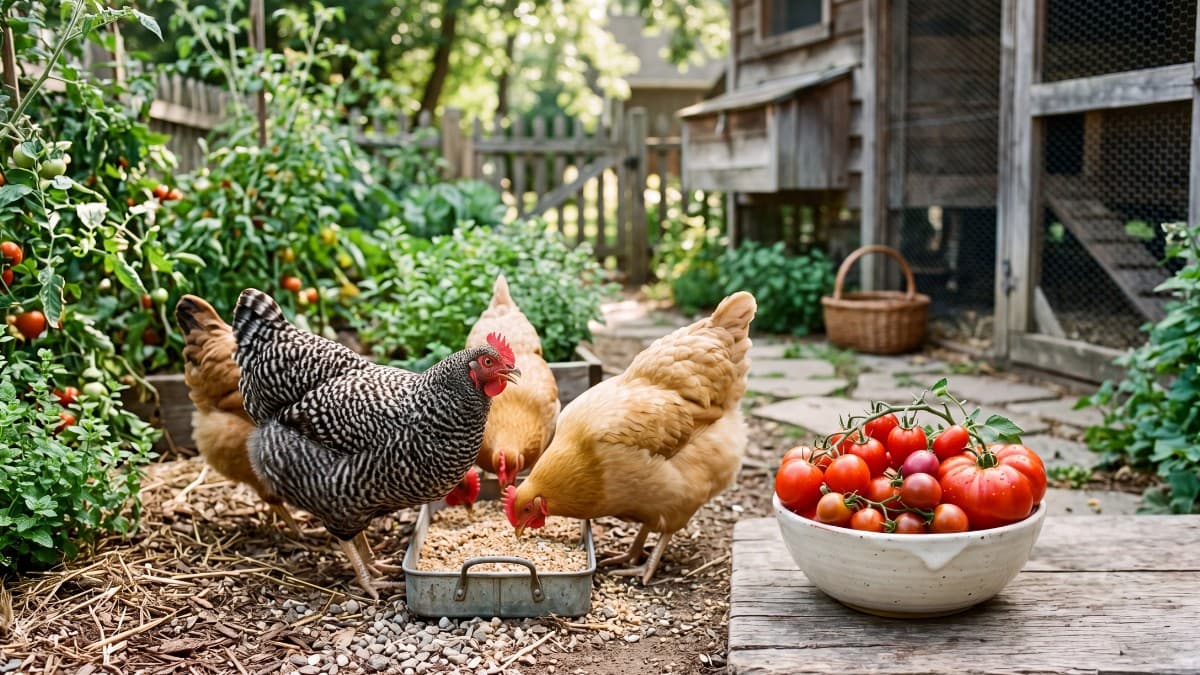
Tomatoes are a highly popular, juicy summer treat that backyard flocks absolutely love. Ripe tomatoes are packed with vitamins and antioxidants that can support flock health and yolk color. However, because tomatoes belong to the nightshade family, keepers must understand the difference between the safe, ripe fruit and the highly toxic green parts of the plant. Feeding green tomatoes or leaves can lead to fatal solanine poisoning. This guide explores the chemistry of nightshade toxins, compares ripe and unripe fruit, details nutritional benefits, and outlines safe preparation methods.
The short answer
Yes, chickens can eat ripe tomatoes safely, including the flesh, seeds, and skin. However, you must never feed them green, unripe tomatoes, or any part of the tomato plant's leaves, stems, or vines, which contain the toxic glycoalkaloid solanine. Serve ripe tomatoes plain and in moderation. Ensuring the fruit is fully red and soft before serving is key to preventing toxicity. Keep tomatoes as an occasional treat rather than a daily feed to avoid watery droppings, as their high moisture content can affect the birds' stool consistency.
Ripe vs green tomatoes
The difference between ripe and unripe tomatoes is critical for flock safety. Ripe tomatoes are soft, fully colored, and safe because their solanine and tomatine levels have degraded to harmless traces during the ripening process. Green, unripe tomatoes contain high concentrations of solanine, which is toxic to birds. Feeding green tomatoes can lead to lethargy, diarrhea, and crop issues. Always ensure tomatoes are fully ripe and soft before offering them to your chickens, and keep them away from green garden windfalls. Green tomatoes should be disposed of in a secure compost pile.
The nightshade family and what to avoid
The nightshade family (Solanaceae) uses glycoalkaloids like solanine as a natural defense mechanism against herbivores. In chickens, solanine damages the intestinal lining and disrupts the nervous system. Ingesting toxic amounts can cause severe diarrhea, weakness, paralysis of the legs, and death. Because of this, you must prevent chickens from pecking at tomato vines, leaves, flowers, and roots. Secure your garden patch with sturdy fencing to prevent accidental foraging. Chickens are curious peckers and will eat green leaves if they are hungry or bored.
Tomatine is another glycoalkaloid found in green tomatoes and leaves. While it is slightly less toxic than solanine, it still causes severe irritation to the mucosal lining of the crop and gizzard, leading to poor nutrient absorption and chronic digestive distress if consumed regularly.
What ripe tomatoes offer
Ripe tomatoes are highly nutritious for chickens. They are a rich source of Vitamin C, Vitamin A, Vitamin K, and potassium. They also contain a powerful antioxidant called lycopene, which supports immune function and cell health. The carotenoids in red tomatoes can also help deepen the color of egg yolks, producing rich, dark orange yolks that are highly prized by keepers. Because tomatoes are about 94 percent water, they are also an excellent hydrating treat during hot summer days, keeping your flock comfortable and reducing the risk of heat stress.
Cherry tomatoes and small varieties
Cherry tomatoes and other small varieties are highly popular because they are the perfect size for chickens to peck at. However, their round shape can occasionally present a minor choking hazard for greedy birds. To prevent this and make them easier to consume, squash or cut cherry tomatoes in half before tossing them into the run. This also exposes the juicy interior, drawing their interest quickly and reducing fighting. Slicing cherry tomatoes also ensures that smaller, submissive hens get a chance to grab a piece without being bullied.
Squashing the cherry tomatoes also prevents them from rolling away when pecked, which can frustrate younger or less agile chickens. It makes the eating process much more efficient and allows multiple hens to share the same fruit peacefully.
Cooked tomatoes and tomato scraps
Cooked tomatoes and plain tomato scraps from your kitchen are safe for chickens, provided they have not been prepared with salt, butter, oil, garlic, or onions. Avoid feeding them commercial tomato products like pasta sauces, ketchup, or canned tomatoes, which contain high levels of sodium and preservatives. Excess sodium is highly toxic to chickens and can lead to kidney failure. Keep the treats natural and plain, and avoid seasoned kitchen waste. Plain tomato paste in tiny amounts is acceptable, but ensure it contains no additives.
If you have leftover tomato paste from kitchen prep, make sure it is 100% pure tomato with no added salt or seasonings. A tiny dollop of plain paste mixed with their dry feed can be a safe, lycopene-rich treat, but commercial canned sauces must be avoided.
Serving size
A safe serving size is about one medium-sized ripe tomato shared among 3 to 4 hens, or a couple of cherry tomatoes per bird, served two to three times a week. Because tomatoes are acidic and watery, overfeeding them can cause loose, watery droppings and mess up the coop bedding. Limit portions to ensure they continue to prioritize their nutritionally complete commercial feed. Excess water in their droppings also increases the humidity levels in the coop, which is undesirable, especially in cold weather.
When to avoid tomatoes
Never feed moldy, rotting, or fermented tomatoes to your flock. Moldy fruit can harbor harmful mycotoxins that cause severe respiratory issues or crop infections. Fermenting tomatoes contain alcohol, which is highly toxic to birds and can cause neurological damage or sudden death. If a tomato is spoiled or showing signs of white or black fuzzy mold, discard it in the compost rather than feeding it. Regularly clean up uneaten tomato scraps from the run to prevent attracting rodents or insects.
Where treats fit
Tomatoes should make up only a small fraction of the 10 percent treat allowance. The remaining 90 percent of their daily intake must consist of complete commercial layer feed to maintain the correct protein and calcium ratios. For details on feed schedules, view our chicken feed guide by age.
Prioritizing complete feed ensures they receive the calcium and protein needed for consistent egg production. For other treat safety guides, see can chickens eat potatoes and can chickens eat onions. Keep their primary nutrition balanced to maintain long-term laying health.
Frequently Asked Questions
Quick, practical answers to common questions about feeding this to chickens.
About the Author

Amy Schmelter is a lifelong chicken keeper raising a large flock in Florida and the author of the upcoming book What I Wish I Knew Before Getting Chickens. She started Chicken Homestead to share what actually works.
Disclosure
Some links on Chicken Homestead may be affiliate links. We only recommend products we’d use ourselves. See our affiliate disclosure for details.