Many new chicken keepers are surprised to learn that chickens can fly, often finding their birds perched on top of the coop or escaping into neighbor yards. While chickens cannot fly like wild birds, they have a surprising ability to clear fences and reach low tree branches. Understanding your birds' flight capabilities by breed, age, and weight helps you design secure fencing and prevent escapes. This guide covers flight distances, breed differences, wing clipping procedures, and how to manage escape-artist hens. Different developmental stages also affect flight capacity, as young, lean birds fly significantly better than heavy, mature hens whose bodies have settled into standard laying weight. Keepers should monitor growing pullets closely.
The short answer
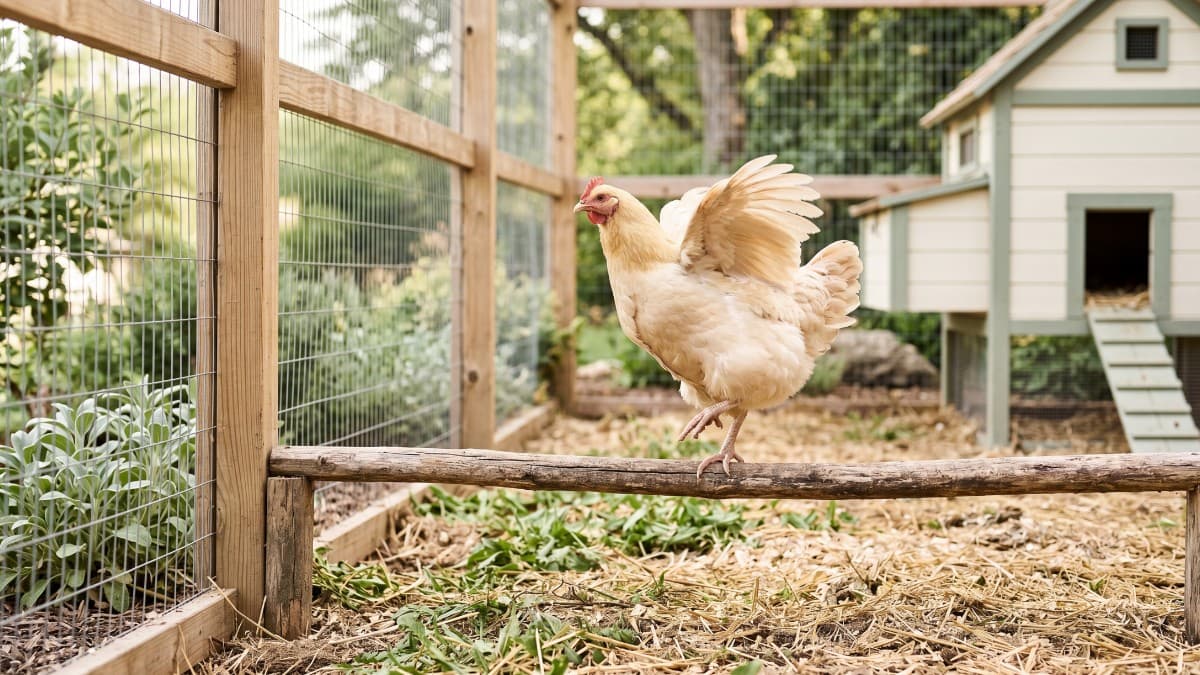
The short answer is yes, most chickens can fly short distances, but their size, weight, and breed dictate how high. Light breeds and young pullets can fly over a 6-foot fence, while heavy heritage breeds can barely clear a 2-foot border. Chickens use flight primarily to escape predators, reach high roosts, or explore new foraging areas in the garden. They cannot fly long distances. Their bodies are built for short, ground-level hops rather than sustained flight.
Their breast muscles are highly developed for short, explosive bursts of energy, which allows them to launch upward quickly. However, they lack the cardiovascular stamina for sustained flight, which is why their flight is mostly a series of high-energy flutters and hops. Flight is an energy-intensive activity that they will avoid unless motivated by food or safety, preferring to walk and scratch on the ground.
How far can a chicken fly
A typical backyard hen can fly 10 to 30 feet in a single attempt, usually less than 6 feet off the ground. Light, active breeds like Leghorns can clear a 6-foot fence and glide 50 feet or more. Heavy breeds may struggle to clear 3 feet. Chickens fly best in short bursts when startled, when chasing food, or when getting up to a roost. They are built for hopping and gliding, not for long flight. In a normal backyard setting, flight is a quick burst of energy to get out of immediate danger or to find a high perch for safety.
Breeds that fly more vs less
Flight capacity varies by breed. Light Mediterranean breeds (like Leghorns and Anconas) are highly aerodynamic and excellent flyers. Hybrid layers (like ISA Browns) and Ameraucanas are also highly agile. Heavy dual-purpose breeds (like Orpingtons, Brahmas, and Cochins) are too heavy to fly, while Silkies cannot fly at all because their fur-like feathers lack the hooks needed to catch air. Bantams are excellent flyers.
Bantams are particularly skilled flyers due to their high wing-to-body-weight ratio. A tiny Sebright or Serama can easily clear a 6-foot fence if motivated. If you are keeping light breeds, you must plan for taller fencing or covered runs to prevent regular escapes. Heavy breeds, by contrast, require only a low border to remain contained, as they prefer to stay grounded.
Even within the same breed, individual weight and conformation can affect flight. A hen that is slightly lighter or has longer wing feathers will fly better than her heavier flockmates. Pullets of heavy breeds can often fly short distances during their first year, but lose this ability as they mature and gain weight.
Age and weight matter
Pullets and lighter hens fly more than older, heavier birds. A young Leghorn pullet may clear a 6-foot fence; the same hen at three years old and 5 pounds may not bother. Heavy laying and good nutrition slow most hens down over time. As laying hens mature, their body shape shifts, and they carry more weight in their abdomen, which makes takeoff much harder. Roosters also fly less than young pullets, as their heavier muscle mass and decorative tail feathers create aerodynamic drag. Younger birds are also more curious and flighty, while older hens develop a calm routine and feel less need to explore beyond boundaries.
When flying becomes a problem
Hens flying out of the run represents several serious problems for the keeper. Escaped hens can wander into roads with active traffic, get lost in thick brush, or enter a neighbor's yard where they might damage gardens or face loose dogs. Roosting in tall trees overnight leaves hens completely exposed to nocturnal predators like owls and raccoons. Hens can also fly onto deck railings, vehicles, or low roofs, creating a cleanup chore and potential property damage. Finally, escaping a temporary chicken tractor or pen can disrupt breeding groups or expose vulnerable birds to the main flock before they are integrated.
How tall a fence needs to be
For heavy breeds like Brahmas, Cochins, and Orpingtons, a 3 to 4 foot fence is usually plenty to contain them. For average backyard breeds like Plymouth Rocks and Wyandottes, a 4 to 5 foot fence is recommended, ideally with a visual barrier on top. For light or active breeds like Leghorns and most bantams, you need a 6-foot fence or a fully covered run. Adding a top cover to the run is the only 100% reliable containment method. You can also run a strand of high-tensile fishing line a few inches above the fence rail; this invisible barrier startles the birds when they try to land, discouraging future escape attempts.
Wing clipping basics
Wing clipping is a simple, painless way to restrict flight. Use sharp kitchen shears to trim the primary flight feathers on only one wing. These are the first 10 long feathers at the wingtips. Cut them back by about half their length, using the secondary feathers as a guide. Trimming only one side makes them off-balance, preventing vertical lift. This prevents escapes while keeping them safe.
Feathers do not contain nerves or blood vessels once they are fully grown, so clipping is exactly like cutting hair. Always inspect the feathers beforehand for 'blood feathers'—new, growing feathers with blue sheaths containing blood—which must never be cut, as they will bleed heavily. The cut feathers will be shed and replaced during their next annual molt, requiring clipping again.
Never clip the feathers of both wings, as this allows the chicken to maintain balance and fly, albeit with less efficiency. Trimming only one wing creates an aerodynamic imbalance that makes straight flight impossible. The bird will spin to one side and land immediately, ensuring they remain contained.
Alternatives to wing clipping
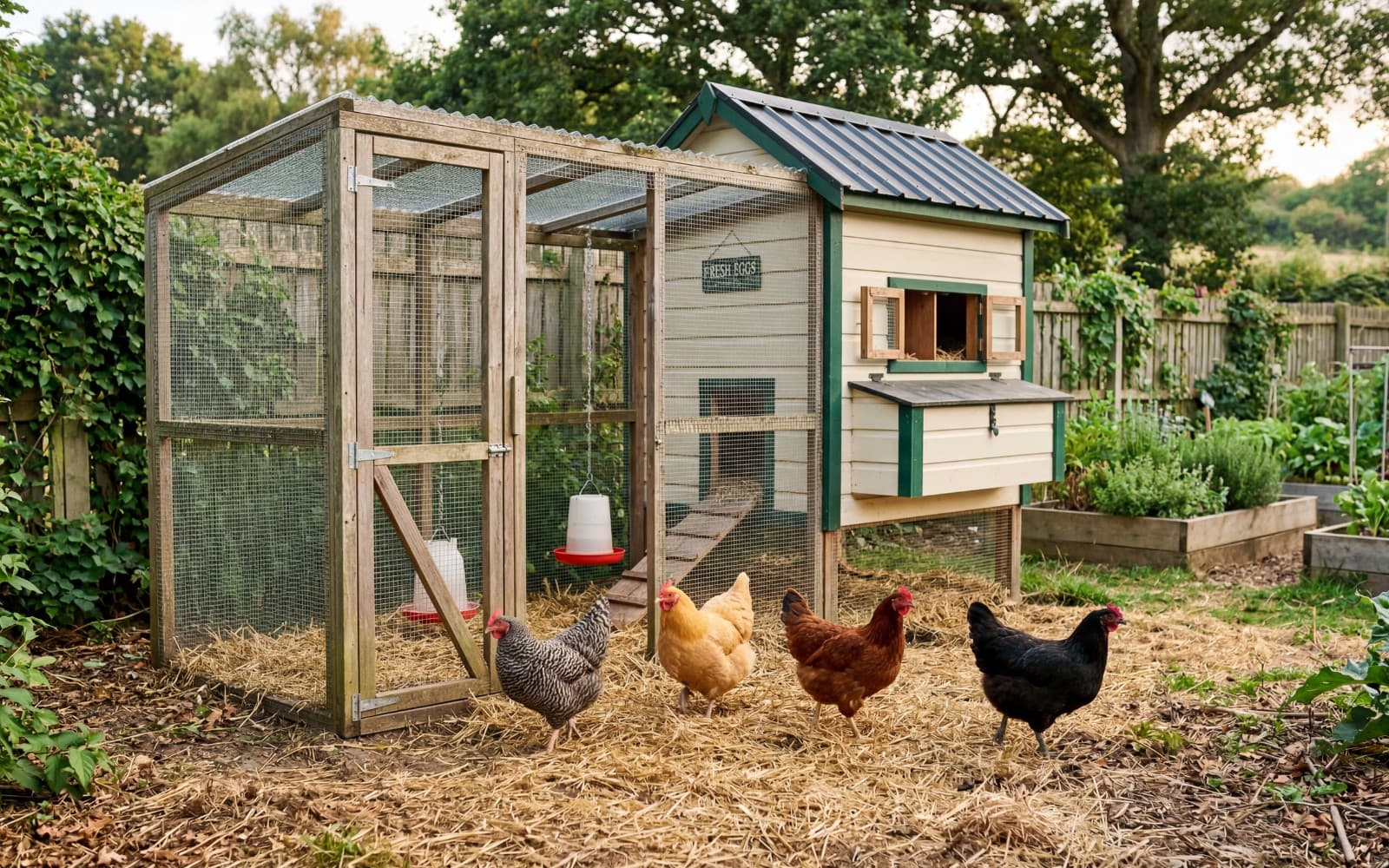
If you prefer not to clip wings, several reliable alternatives exist. Constructing a fully enclosed run with deer netting or hardware cloth overhead completely prevents escapes while keeping hawks out. Providing a larger run with rich environmental enrichment (like perches, swings, logs, and compost piles) keeps chickens occupied so they feel less motivation to escape. You can also build high-level outdoor perches within the run so they can satisfy their instinct to roost high without leaving the safety of the enclosure. Planting dense shrubbery along the outer fence also blocks their view and reduces their desire to explore.
Flying and safety
A flying chicken is a chicken at risk. The goal of containing your birds is to protect them from external dangers. Escaped chickens are easy targets for neighborhood dogs, cats, foxes, and birds of prey. Additionally, if a chicken lands awkwardly from a high flight, they can suffer joint sprains, broken bones, or a painful condition called bumblefoot if they land on hard or rocky ground. Ensuring your flock remains securely inside their designed enclosure is a fundamental responsibility of keeping backyard poultry.
Frequently Asked Questions
Quick, practical answers to common questions about feeding this to chickens.
About the Author

Amy Schmelter is a lifelong chicken keeper raising a large flock in Florida and the author of the upcoming book What I Wish I Knew Before Getting Chickens. She started Chicken Homestead to share what actually works.
Disclosure
Some links on Chicken Homestead may be affiliate links. We only recommend products we’d use ourselves. See our affiliate disclosure for details.