Feed cheese to chickens only in tiny, occasional amounts. Dairy products like cheese are not a natural part of a bird's diet. Because chickens lack the digestive enzymes needed to process milk sugars, dairy must be handled with extreme care. This guide covers the digestive limitations of chickens, which types of cheese are safest, and how to avoid health complications like diarrhea and obesity.
Chickens are opportunistic eaters and will readily consume cheese when offered. However, because cheese is high in fats and sodium, overfeeding it can cause serious digestive and metabolic issues in your flock.
The short answer
Yes, chickens can eat cheese, but only in very small amounts as a rare treat. Chickens are lactose intolerant, so large amounts of dairy will cause severe diarrhea. Choose hard, aged, low-sodium cheeses, and avoid processed varieties. To read more about safe treats, see our guide on what do chickens eat.
Because of the high fat and salt content, cheese must be fed sparingly. It should never make up a significant portion of their daily diet or replace balanced feed.
Is cheese safe for chickens?
Cheese is safe only in tiny quantities. It contains protein, calcium, Vitamin A, and B vitamins. These nutrients support muscle growth, bone density, and feather quality. However, chickens lack the lactase enzyme to break down lactose (milk sugar). Consuming large amounts of lactose causes gas, bloating, and severe diarrhea in poultry.
Cheese is also rich in fats and sodium. High levels of fats can cause fatty liver disease, while excess sodium is highly toxic to chickens and can lead to kidney failure. Therefore, cheese should be viewed as a high-fat supplement rather than a healthy snack.
How to serve cheese to your flock
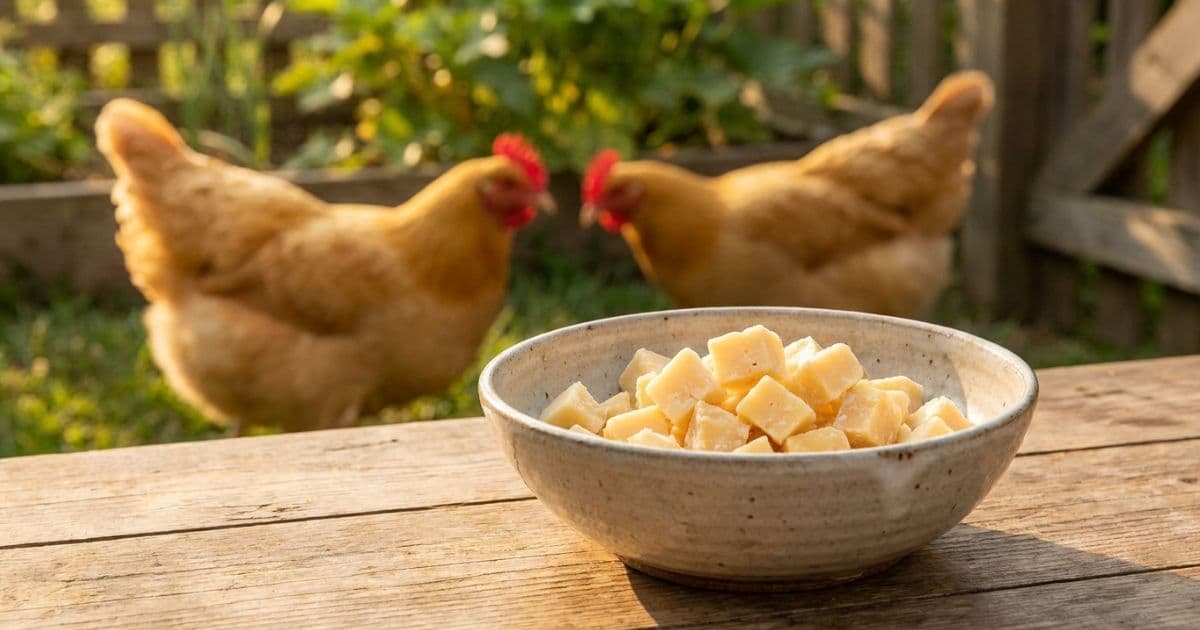
Offer only hard, aged cheeses like Cheddar, Swiss, or Parmesan, as these contain the lowest lactose levels. Grate the cheese or cut it into tiny, crumbly pieces before serving.
You can also feed low-sodium cottage cheese in very small amounts. Toss the cheese crumbles directly into a clean dish or mix them with warm oatmeal or scratch grains to prevent the birds from eating too much too quickly.
Ensure the cheese is fresh. Never feed moldy cheese (like blue cheese or moldy leftovers), as these molds are toxic to poultry.
What forms of cheese should chickens avoid?
You must never feed highly processed cheeses, cheese spreads, or cheese slices (such as American cheese). These products contain emulsifying salts, preservatives, and high sodium levels that are harmful to chickens.
Avoid cheeses seasoned with garlic, onion, jalapeño, or herbs. Also, never feed cheese to young chicks under 8 weeks old. A chick's digestive tract is highly delicate and cannot process dairy, which can cause fatal diarrhea and dehydration.
How much cheese can chickens eat?
Limit cheese to about a teaspoon of grated cheese per adult hen, once a week at most. If you have a small flock, a small handful shared among them is more than enough.
Clean up any leftover cheese from the run immediately. Cheese spoils quickly in warm weather, attracting flies, wasps, and rodents, and can cause sour crop if consumed after it has soured.
Introducing cheese to your flock
To introduce cheese, scatter a tiny pinch of grated hard cheese in a dish. Watch them closely; they will usually snap it up quickly.
Ensure that this treat remains a rare, small-scale event. Do not mix cheese in their main feed hopper.
Signs of digestive distress
Watch for loose, watery droppings or pasting of the vent feathers, which are classic signs of lactose intolerance and gut distress.
If you observe these signs, stop feeding dairy immediately. Provide dry commercial feed and ensure they have access to fresh water to prevent dehydration.
Where cheese fits in a balanced diet
Cheese is a high-fat, high-sodium treat and must stay within the 10 percent treat limit. The remaining 90 percent of their daily intake must consist of complete commercial layer feed to maintain the correct protein and calcium ratios. For a detailed breakdown of feed requirements, read our chicken feed guide by age.
Diluting their diet with high-fat treats can reduce egg quality and overall production. For other treat safety guides, see can chickens eat carrots and can chickens eat avocado.
Frequently Asked Questions
Quick, practical answers to common questions about feeding this to chickens.
About the Author

Amy Schmelter is a lifelong chicken keeper raising a large flock in Florida and the author of the upcoming book What I Wish I Knew Before Getting Chickens. She started Chicken Homestead to share what actually works.
Disclosure
Some links on Chicken Homestead may be affiliate links. We only recommend products we’d use ourselves. See our affiliate disclosure for details.