The Olive Egger chicken is the easiest way to put a deep olive green egg in your basket. Olive Eggers are not a recognized breed; they are a deliberate cross between a blue-egg layer and a dark-brown-egg layer, and the result is the rich green shell that gives them their name. This guide covers what an Olive Egger chicken is, what egg color to expect, how they compare to Easter Eggers and Ameraucanas, and whether they fit a backyard flock. For a wider look at backyard breeds, see our chicken breeds overview.
Olive Egger chicken at a glance
- Class: Hybrid, not a recognized breed
- Hen weight: 5 to 7 pounds
- Rooster weight: 6 to 8 pounds
- Egg color: Olive green (pale sage to deep moss)
- Eggs per year: 150 to 240
- Egg size: Medium to large
- Starts laying: 22 to 28 weeks
- Cold hardy: Very good
- Heat tolerance: Good
- Broodiness: Low to moderate
- Lifespan: 6 to 10 years
- Common look: Muffs, beard, pea or single comb, dark feathers
What an Olive Egger chicken is
An Olive Egger is a first-generation cross between a blue-egg breed and a dark-brown-egg breed. The blue eggshell from one parent and the dark brown coating from the other combine to produce an olive green egg. Common parent crosses include:
- Ameraucana or Easter Egger (blue) crossed with Marans (dark brown)
- Ameraucana or Easter Egger crossed with Welsummer (rich terracotta brown)
- Araucana crossed with Marans or Welsummer
Because the cross is engineered for the eggshell color, Olive Eggers are not a true breed. They do not breed true, which means chicks from Olive Egger parents may lay any color, not necessarily olive. To get olive eggs reliably, most keepers buy first-generation Olive Egger pullets from a hatchery or breeder rather than hatching from their own birds.
Olive Egger chicken egg color
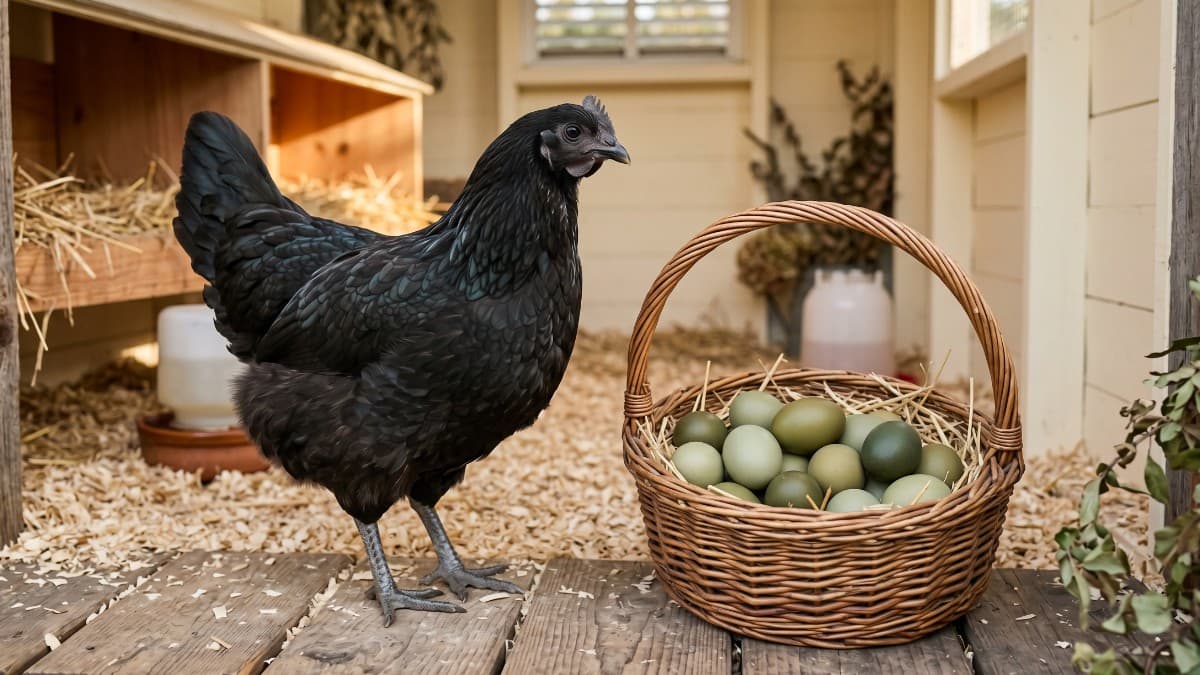
Egg color is the headline feature. Olive Egger eggs range from pale sage to a deep, almost moss green, depending on which parent breeds are used and how heavily the brown bloom coats the shell. Most hens lay one shade of olive for their entire laying life.
What you can expect:
- Light olive: Sage or pale green. More common from Ameraucana x Welsummer crosses.
- Mid olive: Classic olive green. The most common shade from typical Olive Egger crosses.
- Dark olive: Deep moss green or even military olive. More common from Easter Egger or Ameraucana crossed with Black Copper Marans.
- Rare blacks and browns: Occasionally a chick inherits little blue-egg gene and lays a dark brown instead of green, especially in second-generation crosses.
Color does not affect taste, nutrition, or shell strength. A basket of three or four Olive Eggers gives a striking monochrome green spread that pairs nicely with Easter Egger blues and standard brown layers. For a broader look at how egg laying actually works, see our egg laying overview.
Why egg color can vary
Olive green is built in two layers. The blue gene from the Ameraucana, Araucana, or Easter Egger parent colors the eggshell from the inside out. The dark brown layer from the Marans or Welsummer parent coats the outside as the egg moves through the oviduct. Variations in either parent line produce different shades of green.
Things that shift egg color from one Olive Egger to the next:
- Strength of the blue-egg gene. Birds with two copies of the blue gene lay deeper green eggs.
- Strength of the brown bloom. Marans descendants tend to deposit a heavier brown coating, which shifts color toward dark olive.
- Generation. First-generation crosses lay the most reliable olive shades. Second-generation chicks can lay anywhere from olive green to plain blue, brown, or cream.
- Time of year. Color often deepens slightly as a hen finishes a laying season, then resets at the next molt.
- Individual hen. Even sisters from the same hatch can lay different shades of green.
Olive Egger chicken egg production
Olive Egger production sits in the middle of the backyard range. Expect 150 to 240 eggs per year, or roughly 3 to 4 eggs per week at peak. Some hens at the higher end of the range push past 250 in their first laying year, especially when crossed with high-output parents.
- Pullets start laying: 22 to 28 weeks. A little later than Easter Eggers because Marans-influenced lines mature slowly.
- Peak production: First and second laying year.
- Year-over-year decline: About 15 to 20 percent each year after the second.
- Winter laying: They slow with shorter days but handle cold weather well. Many keep laying through mild winters.
- Broodiness: Low to moderate. Most do not sit on a clutch, though Marans-influenced lines occasionally go broody.
For broader laying expectations, see our guides on how many eggs a chicken lays a day and when chickens start laying eggs.
Olive Egger chicken temperament
Most Olive Egger chickens are calm and friendly. The Marans influence brings steady, almost stoic personalities, and the Easter Egger or Ameraucana side adds curiosity. They mix well with other gentle breeds, tolerate handling with regular contact, and rarely bully smaller flock members.
Personality varies more than in true breeds because two different parent lines combine. Some Olive Eggers are downright affectionate, others stay independent. None are flighty in the way Leghorns can be. Children-friendly with respectful handling.
For more breeds with this kind of calm reputation, see our friendliest chicken breeds guide.
Olive Egger chicken size and appearance
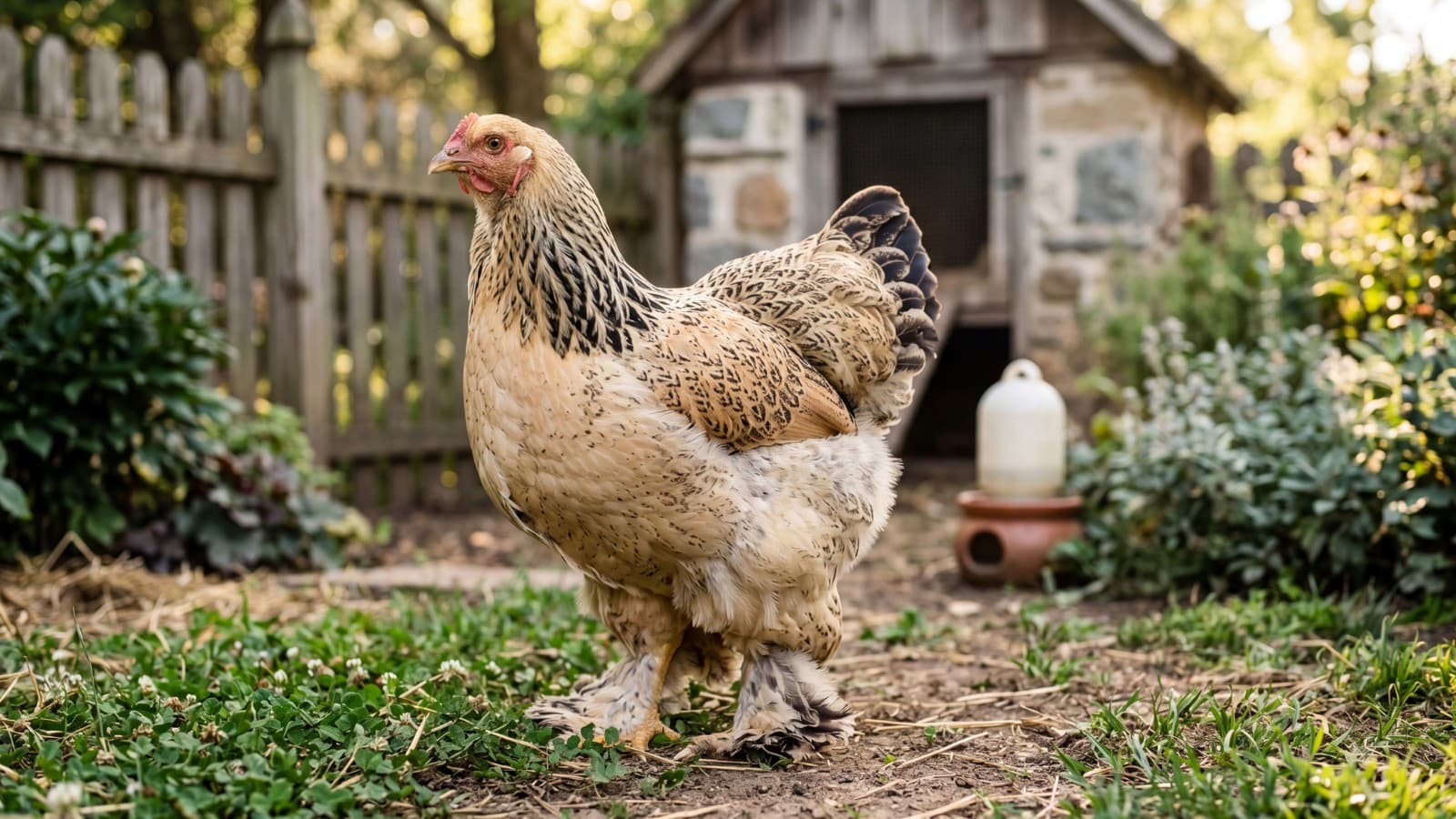
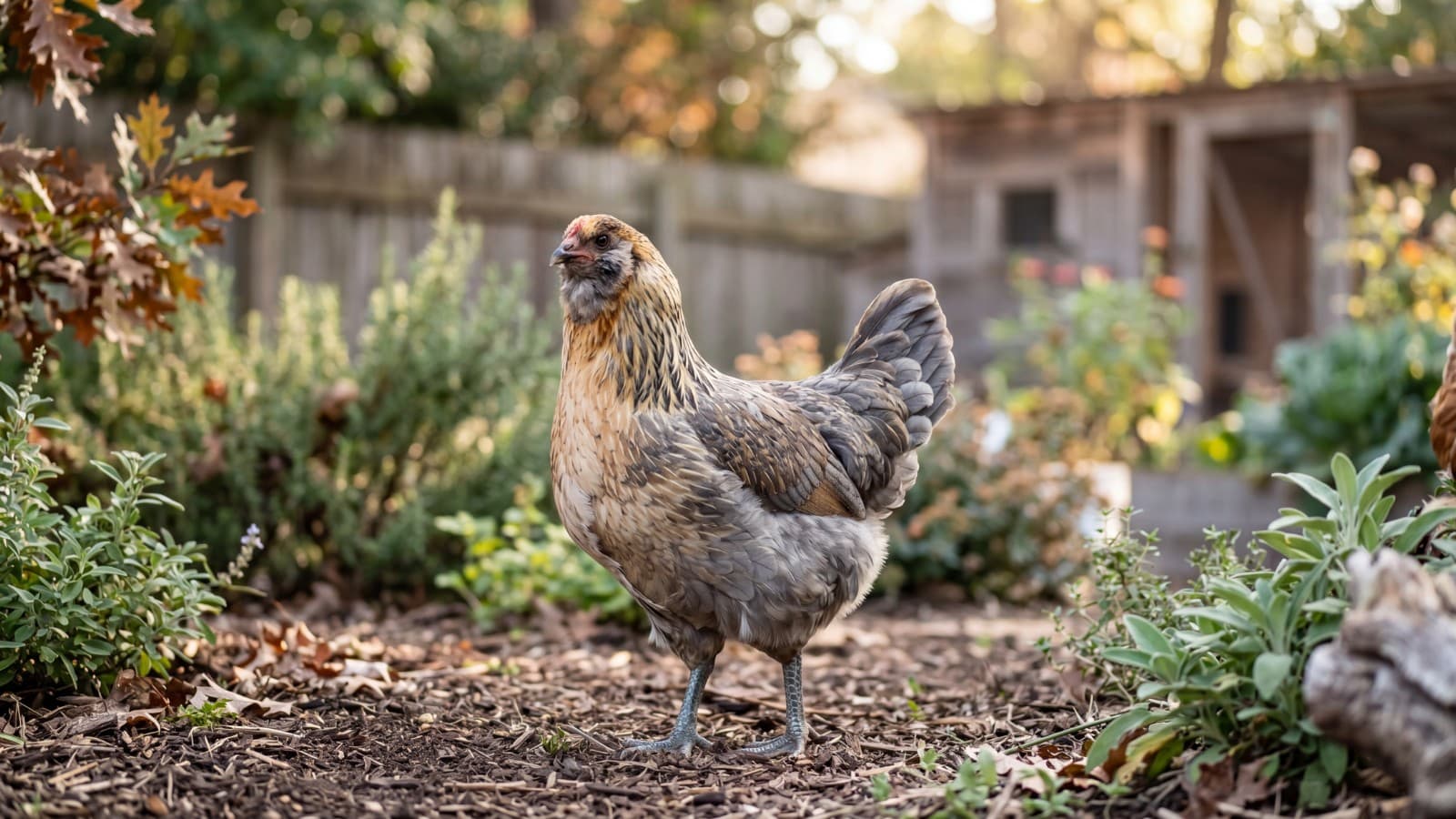
Olive Eggers are medium to medium-large birds. Hens commonly weigh 5 to 7 pounds and roosters 6 to 8 pounds. They are heavier than Easter Eggers because Marans and Welsummer parents carry more body weight. Body shape is round and balanced rather than tall or extreme.
Common features include:
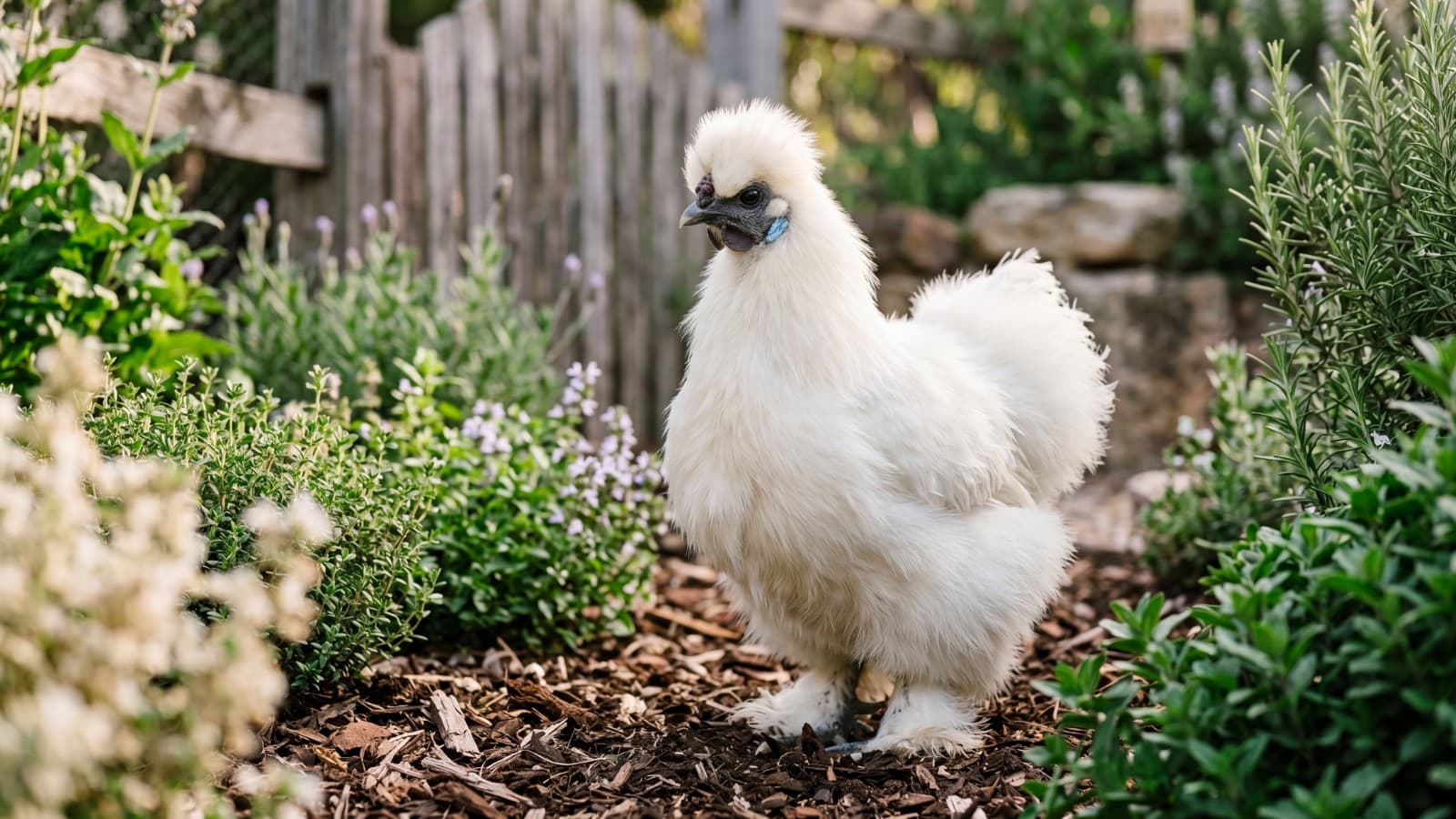
- Muffs and beard. Soft cheek and chin feathering inherited from the Ameraucana side. Not every Olive Egger has them, but most do.
- Dark plumage. Black, copper-laced black, or partridge patterns are most common, reflecting the Marans or Welsummer parent.
- Pea or single comb. Pea combs come from Ameraucana lines, single combs from Marans. Both resist frostbite reasonably well.
- Slate or pinkish-yellow legs. Leg color varies with the cross. Some have feathered legs if Marans parentage came from a feather-legged variety.
Olive Egger hen vs rooster
Telling an Olive Egger hen from a rooster gets clearer by 12 to 16 weeks of age.
- Size: Roosters are typically 1 to 2 pounds heavier and stand a bit taller.
- Comb and wattles: Rooster combs and wattles grow larger and redder earlier. Hen combs stay smaller and paler until laying age.
- Hackle and saddle feathers: Roosters develop long, pointed feathers along the neck and lower back. Hens have rounder, shorter feathers in those spots.
- Tail feathers: Roosters grow longer, curved sickle feathers. Hens have shorter, fan-shaped tails.
- Spurs: Roosters develop visible leg spurs. Hens may have small bumps but rarely real spurs.
- Behavior: Roosters watch the flock, crow, and intervene during predator scares. Hens forage and socialize.
Egg laying: Only hens lay eggs. Roosters do not contribute to the egg basket.
Local rules: Most cities ban roosters in residential areas because of crowing. A hen-only Olive Egger flock works perfectly for a backyard. Hens lay just fine without a rooster.
Olive Egger vs Easter Egger
Olive Eggers and Easter Eggers are both hybrids that carry the blue-egg gene. The difference is what is on the other side of the cross.
- Olive Egger: Blue-egg breed crossed with a dark-brown-egg breed (usually Marans or Welsummer). Eggs are olive green. Birds tend to be heavier with darker plumage.
- Easter Egger: Blue-egg gene crossed with essentially any other breed. Eggs are most often blue or green, sometimes pink or cream. Birds vary widely in size and plumage.
A backyard flock with two Easter Eggers and two Olive Eggers gives a particularly colorful basket: blues, mid greens, olives, and the occasional pink. For the full picture on Easter Eggers, see our Easter Egger chicken guide.
Olive Egger vs Ameraucana
Ameraucanas are a recognized breed. Olive Eggers are a hybrid that often uses an Ameraucana as one parent.
- Ameraucana: Recognized breed with specific accepted color varieties. Lays only blue eggs. Sold by smaller breeders, harder to find at most hatcheries, and more expensive.
- Olive Egger: Hybrid bred specifically for green eggshells. Lays olive green eggs. Easier to find at hatcheries that specialize in colored-egg layers, often mid-priced.
If you want pure blue eggs and a recognized breed, choose Ameraucana. If you want green eggs in the basket, choose Olive Egger.
Olive Egger vs Marans
The Marans is one of the typical parent breeds behind an Olive Egger. Comparing the two side by side:
- Marans: Recognized French breed. Lays dark chocolate brown eggs. Heavier-bodied, calm, and a good cold-climate breed.
- Olive Egger: Hybrid that pairs Marans-style dark-brown egg-shell genetics with a blue-egg parent. Eggs are olive green rather than dark brown. Birds can carry Marans-like body type and feathering, especially the Black Copper Marans line.
A flock that mixes Marans and Olive Eggers gives both deep chocolate and olive eggs in the same basket, with similar temperaments and care needs across both birds.
Coop, feed, and climate
Olive Egger chickens are easy to care for. They are hardy in most climates and use the same setup as any other backyard layer.
- Coop space: About 4 square feet per bird inside, plus 8 to 10 square feet of run space per bird. Olive Eggers are medium-large, so the higher end of the range is more comfortable. See what should be inside a chicken coop.
- Roosts and nest boxes: Standard heights work fine. They will use the highest perch overnight.
- Predator protection: Hardware cloth on every opening, real predator latches, locked at sundown.
- Run cover: A covered or netted run helps with overhead predators and reduces accidental flyovers.
- Feed: Layer feed plus free-choice oyster shell once they start laying. See our chicken feed guides and what do chickens eat for the full picture.
- Water: Constant access to clean water. Even a few hours without water can stop laying.
- Cold weather: Excellent cold hardiness. The Marans and Ameraucana parent lines both handle real winters. A dry coop with good ventilation matters more than added heat.
- Hot weather: Provide shade, cool water, and good airflow at roost level.
For broader coop setup details, see our chicken coops guides.
Pros and cons
Pros: Beautiful olive green eggs, calm and friendly temperament, hardy in most climates, easy to manage alongside other backyard breeds, low to moderate broodiness, good lifespan.
Cons: Do not breed true (chicks may lay any color), not a recognized show breed, slower to start laying than production breeds, lower annual output than top layers, olive shade cannot be picked ahead of time.
Who Olive Eggers are best for
- Backyard keepers who want a colorful, monochrome green egg basket.
- Cold-climate keepers looking for a calm, hardy bird.
- Mixed flocks where you want variety in the basket alongside Easter Eggers, Marans, or standard brown layers.
- Beginners who like a calm temperament and are fine trading a few eggs per year for striking color.
For more breed picks aimed at steady eggs and beginner flocks, see best chicken breeds for eggs.
Olive Egger chickens are one of the most rewarding hybrids for backyard keepers who care about colorful eggs. If you want printable daily care, egg collection, and flock record checklists for your new flock, the Chicken Homestead Checklist Bundle covers all of it.
Frequently Asked Questions
Quick, practical answers to common questions about feeding this to chickens.
About the Author

Amy Schmelter is a lifelong chicken keeper raising a large flock in Florida and the author of the upcoming book What I Wish I Knew Before Getting Chickens. She started Chicken Homestead to share what actually works.
Disclosure
Some links on Chicken Homestead may be affiliate links. We only recommend products we’d use ourselves. See our affiliate disclosure for details.