Celery is a crisp, water-rich vegetable that can be fed to backyard chickens. However, its long, stringy fibers pose a unique physical hazard that keepers must understand. If served incorrectly, celery can cause crop impaction, a dangerous condition in poultry. This guide covers how to prepare celery safely, the benefits of celery leaves, and how to avoid digestive blockages.
Chickens enjoy pecking at crisp vegetables, and celery can provide good hydration, especially during hot weather. By taking a few simple preparation steps, you can offer this vegetable without risking the health of your flock.
The short answer
Yes, chickens can eat celery and celery leaves safely. However, because the stalks contain tough, stringy fibers, you must chop celery into very small pieces (less than 1/4 inch) to prevent crop impaction. Never feed whole celery stalks to your flock. For more on safe treat options, read our guide on what do chickens eat.
While celery is non-toxic, it has very low nutritional density. It should only be offered in small amounts as an occasional supplement to their main feed.
Is celery safe for chickens?
Yes, celery is safe and contains Vitamin K, Vitamin A, Vitamin C, potassium, and calcium. Vitamin K is essential for bone health and blood clotting, while potassium helps regulate fluid balance. However, celery is about 95 percent water, meaning it contains very few calories, proteins, or fats.
Celery leaves are the most nutritious part of the plant. They contain higher concentrations of vitamins and minerals than the stalks and are tender and easy for chickens to digest.
How to serve celery to your flock
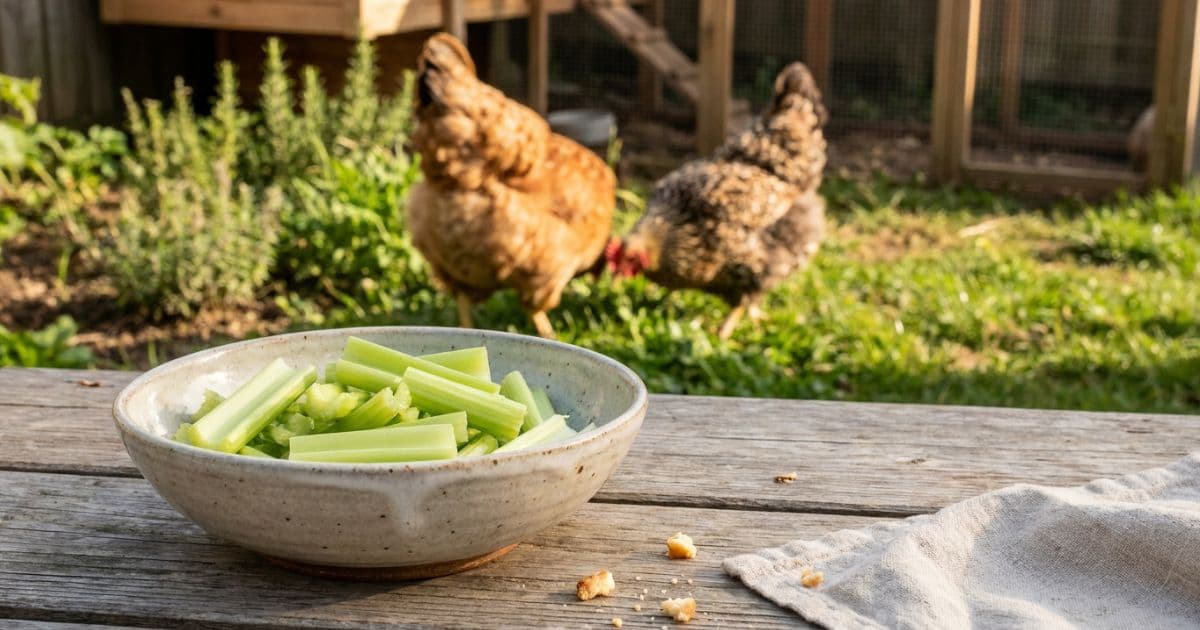
Always chop celery stalks into very small, crosswise pieces before feeding them to your chickens. This cuts the long, stringy fibers into short segments that cannot tangle or accumulate in the crop.
Celery leaves can be fed raw and whole. You can chop them roughly and toss them directly into the run or mix them with other leafy greens.
Make sure to wash the celery thoroughly under cold water to remove any dirt, compost, or pesticide residues before offering it to the birds.
What parts of celery should chickens avoid?
You must avoid feeding whole or large pieces of celery stalks. The long fibers can wrap around other food in the crop, creating a hard ball that cannot pass into the stomach, which can be fatal without veterinary intervention.
Also, avoid celery that has been dipped in peanut butter, salt, salad dressings, or cream cheese. These additives contain high levels of fats, sodium, and sugars that are harmful to chickens.
How much celery can chickens eat?
Offer celery sparingly. A good portion size is about one tablespoon of chopped celery and leaves per hen, once or twice a week. Because of its high water content, overfeeding celery can dilute their nutrient intake and cause watery droppings.
Clean up any uneaten celery from the run at the end of the day. Wilting celery can attract insects and spoil, which may cause digestive issues if eaten later.
Introducing celery to your flock
Introduce celery by mixing a small amount of finely chopped celery leaves and stalks with their daily feed. This helps them get used to the flavor and texture.
Always ensure your flock has access to poultry grit, which is necessary for grinding down fibrous plant matter in their gizzards.
Signs of crop impaction
If celery fibers clog a chicken's crop, the bird will develop crop impaction. Watch for a crop that feels hard, firm, and golf-ball-like, even in the morning before feeding.
Affected chickens may stretch their necks, make swallowing motions, appear lethargic, or stand with hunched feathers. If you suspect an impaction, isolate the bird immediately and seek advice on crop massage.
Where celery fits in a balanced diet
Celery is a low-calorie treat and must stay within the 10 percent treat limit. The remaining 90 percent of their daily intake must consist of complete commercial layer feed to ensure they receive adequate protein and calcium. For a detailed breakdown of feed requirements, read our chicken feed guide by age.
Ensuring that complete feed remains their primary source of nutrition supports consistent laying and overall flock health. For other treat safety guides, see can chickens eat blueberries and can chickens eat oranges.
Frequently Asked Questions
Quick, practical answers to common questions about feeding this to chickens.
About the Author

Amy Schmelter is a lifelong chicken keeper raising a large flock in Florida and the author of the upcoming book What I Wish I Knew Before Getting Chickens. She started Chicken Homestead to share what actually works.
Disclosure
Some links on Chicken Homestead may be affiliate links. We only recommend products we’d use ourselves. See our affiliate disclosure for details.