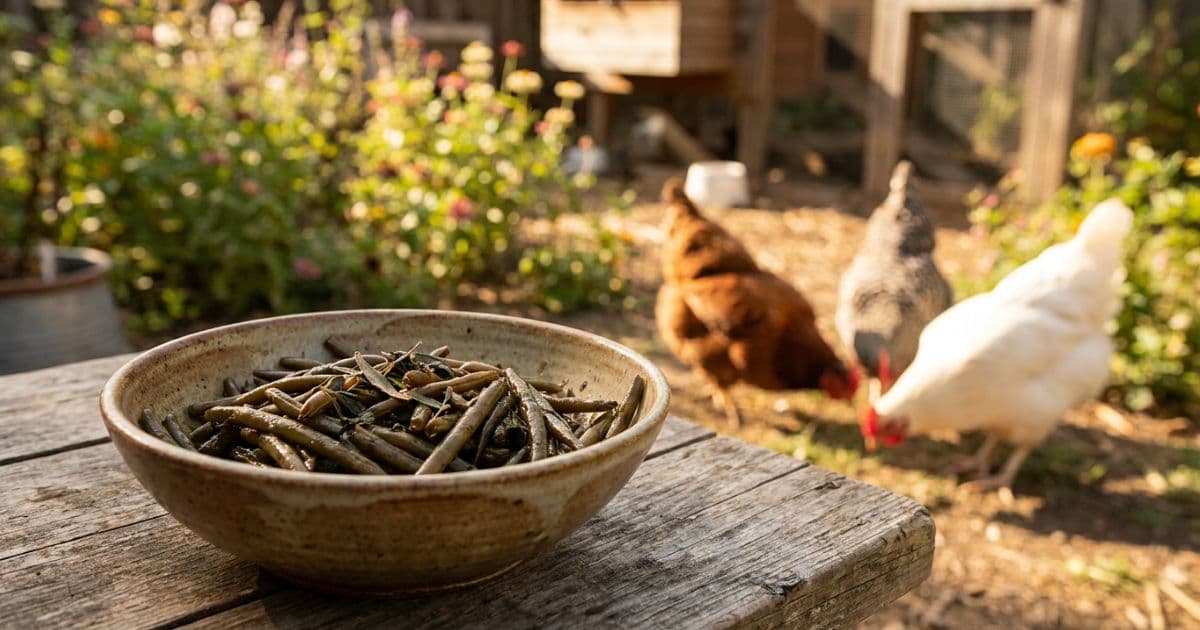
Avoid feeding raw green beans to chickens completely. Green beans (also known as string beans or snap beans) are highly nutritious legumes, but they present a hidden toxicity risk. Raw and dried green beans contain lectins, which are toxic to birds and can cause severe digestive tract damage. This guide covers the science of lectin toxicity, how cooking makes green beans safe, and how to serve them to your flock.
Many keepers discard raw vegetable trimmings into the chicken run, assuming all grains/greens are safe. However, legumes require cooking to neutralize their natural defenses. Understanding these food safety rules is essential for keeping your backyard flock healthy.
The short answer
Chickens can eat green beans, but only if they are thoroughly cooked. Raw or dried green beans contain toxic lectins and must never be fed to your flock. Always boil, steam, or bake green beans until soft before serving. For a general overview of safe flock treats, see our guide on what do chickens eat.
Cooked green beans are safe and nutritious, but they must still be offered in moderation as an occasional treat. They must not replace complete commercial layer feed.
Why raw green beans are toxic to chickens
Raw green beans contain phytohaemagglutinin, a type of plant lectin that serves as a natural pest deterrent. Ingesting raw lectins causes agglutination (clumping) of red blood cells and damages the mucosal lining of the chicken's digestive tract. This leads to severe gastrointestinal distress, including vomiting, diarrhea, malabsorption of nutrients, and internal bleeding.
Cooking green beans at high temperatures breaks down these toxic lectins, making the beans safe for chickens to eat. Raw dried beans contain even higher concentrations of lectins and are extremely dangerous. Always ensure green beans are fully cooked and soft.
How to serve green beans safely to your flock
Thoroughly boil or steam fresh or frozen green beans until they are soft and tender. You must never add salt, butter, bacon grease, garlic, or onions to the beans. Allow them to cool completely to room temperature before tossing them to the flock.
You can chop the cooked green beans into small pieces to make them easier for hens of all sizes to consume. Slicing them also prevents choke hazards, particularly for younger birds in the flock.
If using canned green beans, ensure they are labeled "no added salt." Rinse them thoroughly under cold water to remove excess sodium before serving.
What parts of green beans should chickens avoid?
You must avoid raw green beans, raw pod trimmings, and dried raw beans. Keep your chickens away from green bean patches in the garden, as they may peck at raw beans on the vine.
Green bean leaves and stems are generally safe for chickens to peck at. Unlike nightshade foliage, legume leaves do not contain solanine. However, make sure the plants have not been treated with chemical pesticides before letting your flock near them.
How much green bean can chickens eat?
A good portion size is one or two chopped cooked green beans per hen, two or three times a week. Overfeeding green beans can cause loose, watery droppings due to their fiber and water content.
Clean up any uneaten green beans from the run at the end of the day. Cooked vegetables spoil quickly and can harbor dangerous bacteria or molds that cause sour crop.
Introducing green beans to your flock
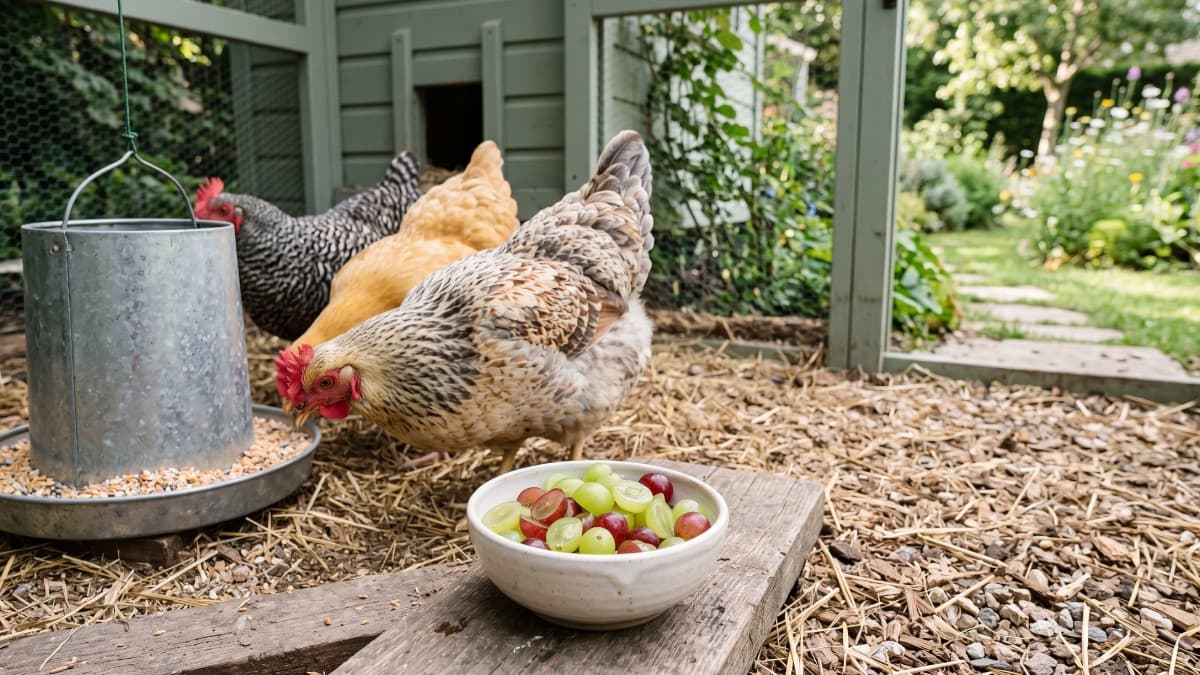
To introduce green beans, offer a small pile of cooled, chopped cooked beans in a shallow feeding dish.
Observe your chickens to make sure they do not fight over the new food and that they are chewing/swallowing it without difficulty.
Signs of lectin poisoning
If a chicken ingests raw green beans, look for symptoms of lectin poisoning within a few hours. These include severe diarrhea, bloody stools, lethargy, fluffed feathers, and rapid weight loss.
Lectin damage to the intestinal lining can be severe. If you notice these symptoms, isolate the bird, provide clean water, and withhold all treats.
Where green beans fit in a balanced diet
Green beans must fit within the 10 percent treat limit. The remaining 90 percent of their daily intake must consist of complete commercial layer feed, which is formulated with the correct protein and calcium ratios. For more details on feed requirements, view our chicken feed guide by age.
Ensuring your flock receives balanced nutrition supports consistent laying and overall flock health. For other treat safety guides, see can chickens eat cheese and can chickens eat carrots.
Frequently Asked Questions
Quick, practical answers to common questions about feeding this to chickens.
About the Author

Amy Schmelter is a lifelong chicken keeper raising a large flock in Florida and the author of the upcoming book What I Wish I Knew Before Getting Chickens. She started Chicken Homestead to share what actually works.
Disclosure
Some links on Chicken Homestead may be affiliate links. We only recommend products we’d use ourselves. See our affiliate disclosure for details.