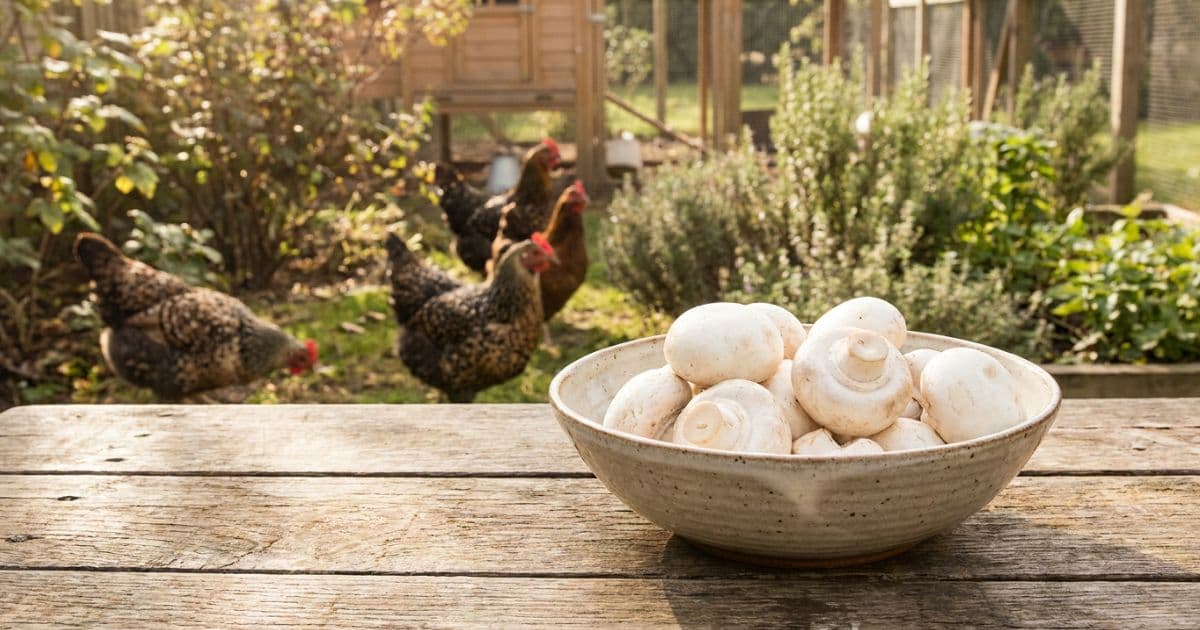
Mushrooms can be fed to backyard chickens, but they require a strict level of caution. While store-bought mushrooms are safe when cooked, wild mushrooms present a fatal hazard. This guide explains the difference between safe culinary mushrooms and toxic wild species, covers the digestive issues associated with raw fungi, and outlines how to prepare mushrooms safely.
Because chickens are natural foragers, they may peck at wild mushrooms growing in pasture or wood chips. Understanding the dangers of wild fungi and implementing a zero-tolerance pasture rule is essential for protecting your flock from fatal poisoning.
The short answer
Chickens can eat cooked, store-bought mushrooms (such as white button, cremini, or portobello) in moderation. You must never feed wild or foraged mushrooms to your chickens, as many species are highly toxic and fatal. Serve store-bought mushrooms cooked plain. For more on safe treats, see our guide on what do chickens eat.
Raw mushrooms are tough and contain compounds that are difficult for birds to digest. Always cook them before serving to ensure they are safe and digestible.
Are mushrooms safe for chickens?
Yes, cooked store-bought mushrooms are safe. They contain B vitamins, selenium, potassium, and antioxidants. These nutrients help support metabolic health and immune function. Mushrooms also contain beta-glucans, which support a healthy gut microbiome.
However, raw mushrooms contain chitin, a fibrous substance that forms the cell walls of fungi. Chitin is extremely difficult for a chicken's digestive system to break down. Raw mushrooms also contain trace amounts of agaritine, which is neutralized by cooking. Cooking softens the chitin and makes the nutrients accessible.
How to serve mushrooms to your flock
Always cook store-bought mushrooms before feeding them to your chickens. You can steam, boil, or sauté them in a pan. If sautéing, do not use butter, oil, salt, garlic, or onions. Cook the mushrooms plain in a splash of water.
Allow the cooked mushrooms to cool completely to room temperature before serving. Chop them into small, bite-sized pieces so they are easy for the birds to peck and swallow.
You can mix the chopped cooked mushrooms with other safe cooked vegetables or warm oats.
What parts of mushrooms should chickens avoid?
You must never feed wild, unidentified, or foraged mushrooms to your chickens. Many wild species contain toxins (such as amanitins or gyromitrin) that cause rapid liver failure, kidney damage, or neurological death in birds. Regularly inspect your yard and remove any wild fungi.
Avoid feeding raw mushrooms. Also, skip mushrooms cooked with salt, butter, oil, garlic, or onions. Salt is toxic to chickens, and excess fats can lead to fatty liver disease.
How much mushroom can chickens eat?
Limit mushrooms to about one tablespoon of chopped cooked mushrooms per adult hen, once a week. Because mushrooms are not a natural staple, they should be offered as a rare novelty rather than a regular treat.
Remove any uneaten mushrooms from the run after an hour. Cooked mushrooms spoil quickly and can harbor dangerous bacteria or molds if left in the sun.
Introducing mushrooms to your flock
To introduce cooked mushrooms, mix a tiny amount of chopped, cooled, plain mushroom into their regular layer mash.
Observe their droppings and crop emptying over the next 24 hours to ensure they tolerate the food well.
Signs of poisoning
If your chickens consume wild toxic mushrooms, symptoms will appear quickly. Look for severe weakness, loss of coordination, respiratory distress, convulsions, or watery diarrhea.
Mushroom poisoning is often fatal within a short time. Inspect wood chips and damp areas of the run daily to prevent exposure.
Where mushrooms fit in a balanced diet
Mushrooms must fit within the 10 percent treat limit. The remaining 90 percent of their daily intake must consist of complete commercial layer feed to ensure they receive the protein and calcium needed for egg laying. For more on feeding requirements, read our chicken feed guide by age.
Ensuring your flock receives balanced nutrition supports consistent laying and overall flock health. For other treat safety guides, see can chickens eat green beans and can chickens eat cheese.
Frequently Asked Questions
Quick, practical answers to common questions about feeding this to chickens.
About the Author

Amy Schmelter is a lifelong chicken keeper raising a large flock in Florida and the author of the upcoming book What I Wish I Knew Before Getting Chickens. She started Chicken Homestead to share what actually works.
Disclosure
Some links on Chicken Homestead may be affiliate links. We only recommend products we’d use ourselves. See our affiliate disclosure for details.