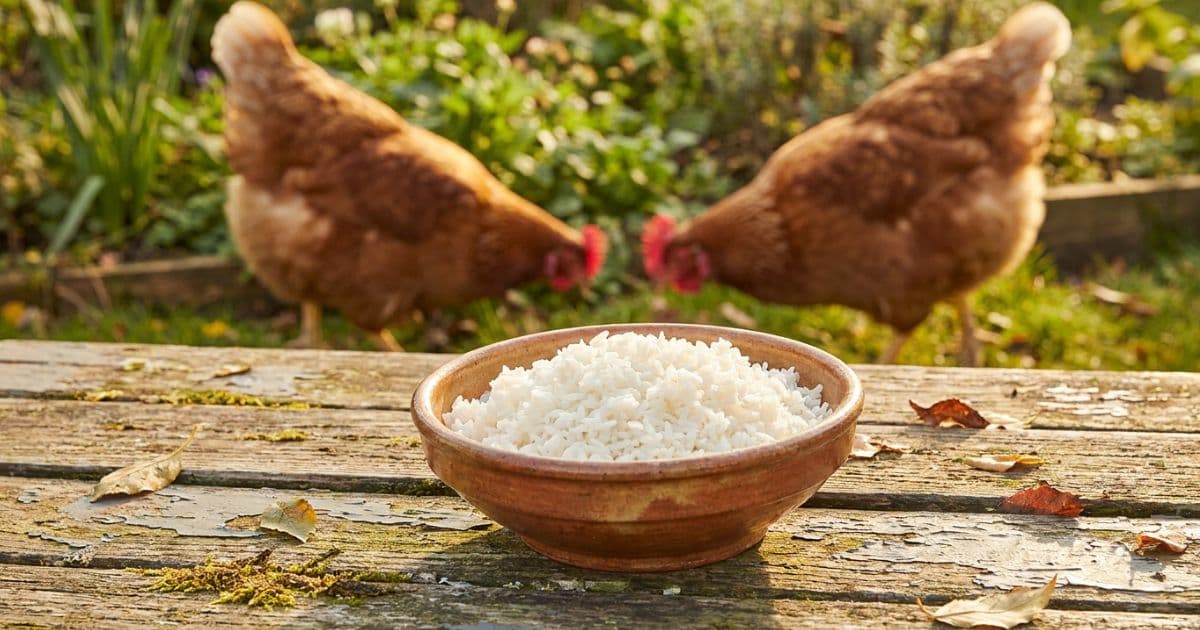
Rice is a common kitchen scrap that can be a safe and economical treat for backyard chickens. Despite popular myths, both cooked and uncooked rice are safe for poultry when served correctly. This guide details the nutritional value of rice, debunks common misconceptions, and explains how to feed rice safely without causing digestive problems or weight issues in your flock.
Grains are a natural part of a chicken's diet, and rice can serve as an excellent source of quick energy, especially during cold winter months. However, because rice is starch-heavy, it must be offered in moderation to maintain a healthy flock.
The short answer
Yes, chickens can eat cooked or uncooked rice safely. The myth that uncooked rice expands and kills birds is false. A chicken's crop and gizzard easily grind down raw grains. Always serve rice plain, and avoid seasoned or salted varieties. To read more about safe treats, see our guide on what do chickens eat.
Rice is primarily starch and lacks the high protein and calcium levels required by laying hens. Because of this, it should only be fed in small quantities as an occasional treat.
Is rice safe for chickens?
Rice is safe and provides an immediate source of carbohydrates for energy. It also contains small amounts of B vitamins, niacin, thiamine, and iron, which support nervous system function and metabolic health. Brown rice is more nutrient-dense than white rice because it retains the outer husk, which contains extra fiber and minerals.
White rice has had its husk and germ removed, leaving mostly starch. While still safe, it offers very little nutritional value. Rice should be viewed as an energy supplement rather than a source of vital nutrients.
Feeding too many low-nutrition carbs can lead to fat buildup around internal organs, which is a major health hazard for laying hens.
How to serve rice to your flock
You can serve cooked or uncooked rice. If serving cooked rice, ensure it has been boiled plain in water without any added salt, butter, oil, or seasonings. Let it cool completely to room temperature before feeding it to your chickens.
Uncooked rice can be scattered directly in the run to encourage scratching and foraging. This provides mental stimulation and exercise as the birds search through the dirt for the grains. Ensure they have access to poultry grit, which is necessary for grinding down raw grains in the gizzard.
What forms of rice should chickens avoid?
You must never feed seasoned rice, fried rice, or instant rice mixes containing flavor packets to your chickens. These products are high in sodium and fats, which can lead to kidney damage and fatty liver disease.
Avoid feeding rice that has begun to ferment, sour, or develop mold. Moldy grains contain mycotoxins that can cause severe illness or death in birds. If cooked rice has been left in the refrigerator for too long, throw it in the compost rather than feeding it to your flock.
How much rice can chickens eat?
Limit rice to about one tablespoon of cooked rice per adult hen, once or twice a week. If feeding uncooked rice, scatter it sparingly so that no single bird consumes too much. Overfeeding rice can crowd out essential nutrients from their main feed, leading to nutritional deficiencies.
If feeding cooked rice, clean up any leftovers after an hour. Wet rice spoils quickly in the sun, attracting flies, mold, and vermin to your coop.
Introducing rice to your flock
To introduce rice, scatter a tiny handful of raw rice grains onto dry ground in the run. Chickens will naturally peck at the small grains. If serving cooked rice, offer a small dollop in a flat dish so they can inspect it.
Always ensure your birds have access to plenty of fresh water and grit before introducing dry grains.
Signs of crop issues
Overfeeding cooked or uncooked rice can lead to an impacted or sour crop. If you notice a hen with a swollen, squishy, or hard crop that does not empty overnight, she may have a blockage.
Other signs of crop issues include a foul smell coming from the beak, lethargy, and a lack of interest in food. If you observe these signs, isolate the bird and withhold food while providing fresh water.
Where rice fits in a balanced diet
Rice is a high-carbohydrate treat and must remain within the 10 percent treat limit. The remaining 90 percent of their daily intake must consist of complete commercial layer feed to maintain egg production and feather health. For more details on feed requirements, view our chicken feed guide by age.
Diluting their diet with too many grains can reduce eggshell quality and overall production. For other treat guides, see can chickens eat cheese and can chickens eat carrots.
Frequently Asked Questions
Quick, practical answers to common questions about feeding this to chickens.
About the Author

Amy Schmelter is a lifelong chicken keeper raising a large flock in Florida and the author of the upcoming book What I Wish I Knew Before Getting Chickens. She started Chicken Homestead to share what actually works.
Disclosure
Some links on Chicken Homestead may be affiliate links. We only recommend products we’d use ourselves. See our affiliate disclosure for details.